


The Halloween Candy That Could Crack Your Child’s Tooth: What Parents Need to Know
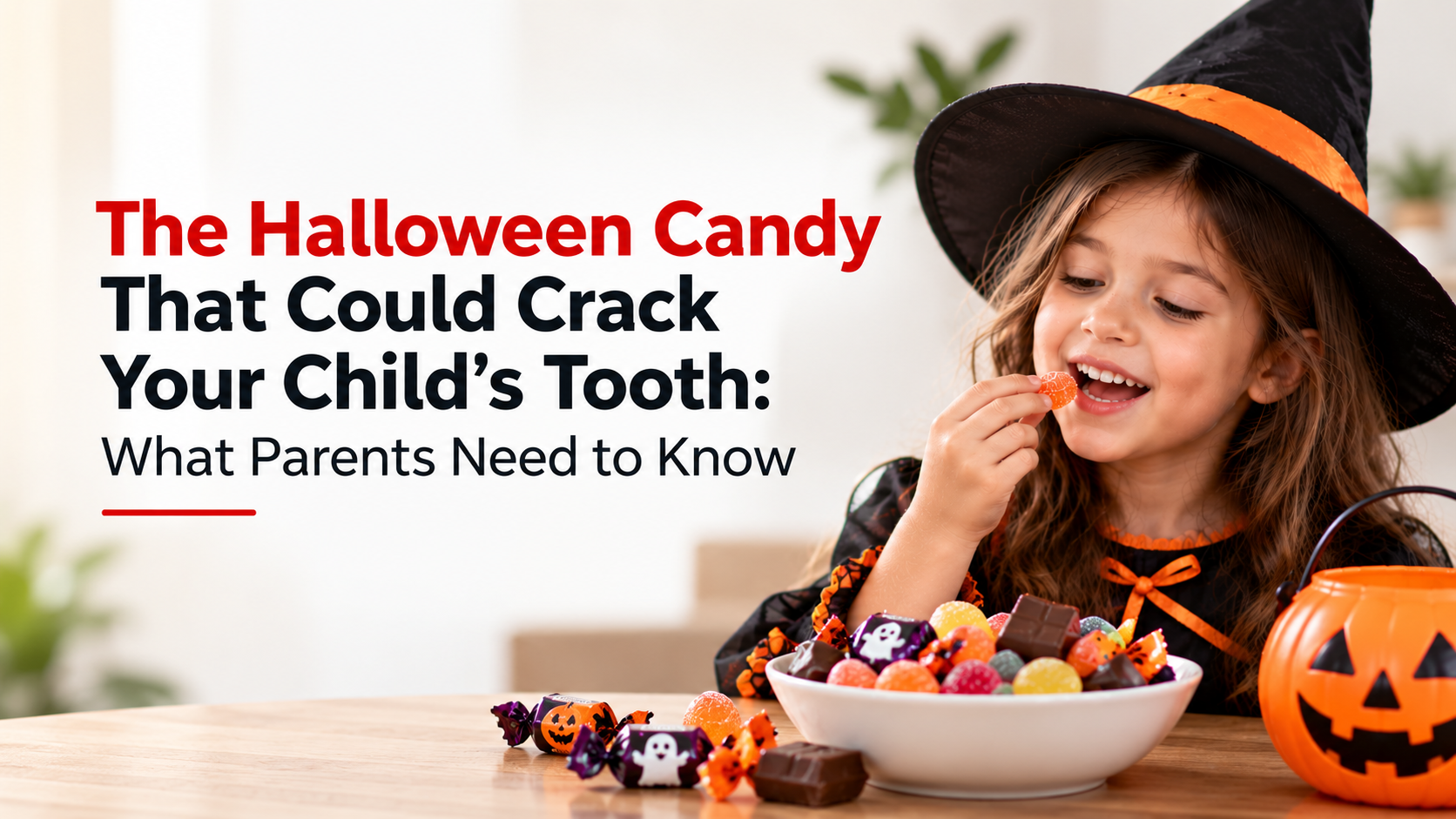
Halloween is one of those times of year kids look forward to for weeks. The costumes, trick-or-treating, and, of course, the candy!
But while your child is busy sorting through their Halloween haul, there’s something parents may not think about: some of those favorite treats can be surprisingly tough on little teeth.
A hard candy can crack a tooth when bitten. Sticky gummies can cling to the grooves of molars. And chewing on something unexpectedly hard can turn a fun Halloween night into an unexpected dental visit.
The good news? Your child doesn’t have to skip Halloween candy altogether. Knowing which treats to watch out for and how to protect their teeth can make the holiday a little less stressful for everyone.
At Smile Explorers Pediatric Dentistry, we want families to enjoy Halloween while keeping those growing smiles healthy.
1. Hard Candies: A Small Treat That Can Cause a Big Problem
Hard candies may seem harmless because they dissolve slowly. But the trouble often starts when children bite down on them instead of letting them melt.
Lollipops, jawbreakers, hard mints, and other crunchy candies can put significant pressure on a tooth.
If a tooth already has a cavity, a large filling, or weakened enamel, biting into something hard may increase the chance of a chip or fracture.
What parents can do: Encourage children to let hard candies dissolve rather than crunching them. For younger children, hard candies and lollipops can also present a choking risk, so age-appropriate treats matter.
And remember, even a tooth that doesn’t hurt immediately after a hard bite may still need attention if you notice a chip or crack.
2. Sticky Gummies and Caramel: The Candy That Won’t Let Go
If there’s one type of Halloween candy parents should be especially mindful of, it’s the sticky stuff.
Gummy bears, taffy, caramel, fruit chews, and similar treats can stick to the surfaces and grooves of children’s teeth.
The problem is that sticky candy can be difficult for saliva to wash away. When sugary residue stays around the teeth, cavity-causing bacteria can use those sugars to produce acids that damage enamel.
This can be particularly concerning around the back molars, where food and candy can get trapped.
Sticky sweets can also pull on loose fillings or dental restorations.
What parents can do: Offer sticky candy less often, encourage water after treats, and make sure children brush carefully before bedtime.
For kids with braces, retainers, or dental appliances, sticky candy can be especially troublesome. Check with your child’s orthodontist or dentist about which treats to avoid.
3. Popcorn and Candy With Hard Pieces
Not every Halloween treat comes in a colorful wrapper.
Popcorn balls, candy containing nuts, and sweets with hard pieces can also cause problems if a child bites down on an unexpectedly hard object.
Popcorn kernels and unpopped pieces can be particularly uncomfortable if they become trapped between teeth or under the gums.
For children with loose baby teeth, newly erupting permanent teeth, or existing dental problems, it’s worth being a little more cautious.
A simple tip: Before your child eats a treat, take a quick look at its ingredients and texture. If it contains very hard pieces, consider choosing something softer.
4. Sour Candy: Not So Sweet for Tooth Enamel
Sour candy is a Halloween favorite for many children, but its acidity is worth knowing about.
Many sour candies contain acids that give them their tangy taste. Frequent exposure to acidic foods and drinks can soften tooth enamel, making teeth more vulnerable to wear.
Combining acidic candy with frequent snacking throughout the evening can increase the amount of time teeth are exposed to acids and sugars.
What parents can do: Keep sour candy as an occasional treat rather than something children snack on throughout the day.
After eating sour candy, have your child rinse with water. It’s also a good idea to wait about 30 minutes before brushing, allowing softened enamel time to recover.
5. What About Chocolate?
Here’s some good news for chocolate lovers!
Plain chocolate, especially chocolate that melts easily, is generally less likely to stick to teeth than gummy or chewy candy.
That doesn’t mean chocolate is completely harmless. It still contains sugar, and frequent snacking can contribute to tooth decay.
But when choosing between different Halloween treats, plain chocolate can be a more tooth-friendly option than hard candy, sticky caramels, or sour gummies.
The key is moderation, enjoying treats with meals when possible, and maintaining a good brushing and flossing routine.
What Should You Do if Your Child Chips or Breaks a Tooth?
Even with careful supervision, accidents happen. A child might bite into a hard candy, fall while trick-or-treating, or bump their mouth during Halloween festivities.
If your child chips or breaks a tooth, try to stay calm. Here’s what you can do.
Step 1: Check Your Child’s Mouth
Look for bleeding, swelling, a visible chip, or a tooth that appears loose or displaced.
If your child is in pain, ask them to gently rinse their mouth with water.
If there is bleeding, apply gentle pressure with clean gauze.
Step 2: Save Any Broken Tooth Pieces
If you can find the broken piece, save it and bring it with you to the dental appointment.
Place it in a clean container. Your pediatric dentist can examine the tooth and determine whether the fragment is useful for treatment.
Step 3: Avoid Chewing on the Injured Tooth
Encourage your child to eat soft foods and avoid biting down on the affected area until a dentist has evaluated it.
If there is swelling, a cold compress applied to the outside of the cheek may help.
Step 4: Contact a Pediatric Dentist
A chipped tooth may not always be painful, but that doesn’t mean it should be ignored.
Contact your child’s dentist promptly if a tooth is cracked, broken, loose, or displaced.
If your child has severe pain, significant facial swelling, uncontrolled bleeding, or difficulty breathing or swallowing, seek urgent medical attention.
A knocked-out permanent tooth is a dental emergency and requires immediate professional care. A knocked-out baby tooth should not be placed back into the socket.
Getting the right care quickly can help protect your child’s developing smile.
6. How to Protect Your Child’s Teeth After Halloween
You don’t have to throw away every piece of candy to protect your child’s teeth.
A few simple habits can make a meaningful difference.
Set a candy routine. Rather than letting children snack on candy all day, offer a small portion after a meal.
Choose water. Water helps rinse away food particles and keeps the mouth hydrated.
Brush twice a day. Help younger children brush with fluoride toothpaste and make sure they clean all surfaces of their teeth.
Don’t forget flossing. Candy can get trapped between teeth, especially around the back molars.
Keep up with dental visits. Regular pediatric dental checkups help identify cavities, weakened teeth, and other concerns before they become more serious.
If your child has a history of cavities, braces, or dental restorations, ask your dentist about specific Halloween treats that may be better avoided.
Enjoy Halloween Without the Dental Fright!
Halloween should be about costumes, laughter, and making memories—not worrying about every piece of candy in your child’s bucket.
A little planning, sensible candy choices, and good brushing habits can help keep your child’s smile healthy throughout the holiday.
And if a Halloween treat leads to an unexpected dental problem, Smile Explorers Pediatric Dentistry is here to help.
Need a Pediatric Dentist in Arizona?
Whether your family is in Glendale, Deer Valley, Anthem, Norterra, or Arrowhead Ranch, Smile Explorers Pediatric Dentistry is committed to helping children feel comfortable and confident during their dental visits.
If your child chips a tooth, experiences dental pain, or needs a routine checkup after Halloween, contact your nearest Smile Explorers location to discuss the next steps.
Schedule your child’s dental visit with Smile Explorers Pediatric Dentistry and keep their little smile ready for every adventure!
Medical Disclaimer: This article is for general educational purposes and is not a substitute for professional dental advice, diagnosis, or treatment. Contact a qualified dental professional if your child experiences a dental injury or ongoing tooth pain.
The Truth About Fluoride: Myths vs. Facts for Your Child’s Teeth
As a parent, you want your child to have a healthy smile that lasts a lifetime. You help them brush their teeth, encourage healthy eating habits, and schedule regular dental checkups. But when it comes to fluoride, many parents still have questions. Is fluoride safe for kids? Should babies use fluoride toothpaste? Can fluoride prevent cavities? What happens if a child swallows toothpaste? With so much information available online, it can be difficult to separate facts from myths. The good news is that fluoride is an important part of preventive dental care when used appropriately. It helps strengthen tooth enamel, supports the repair of early mineral loss, and reduces the risk of tooth decay. In this guide, we will explore the most common fluoride myths and facts, explain how fluoride protects children’s teeth, and share what parents should know about fluoride toothpaste and professional fluoride treatments.
What Is Fluoride and Why Is It Important for Children’s Teeth?
Fluoride is a naturally occurring mineral found in water, soil, and certain foods. It is also used in toothpaste and professional dental treatments because of its ability to help prevent cavities. Throughout the day, bacteria in your child’s mouth feed on sugars from food and drinks. This produces acids that can weaken tooth enamel. Repeated acid attacks may eventually lead to tooth decay. Fluoride helps protect teeth through a process called remineralization. It supports the repair of early mineral loss and makes enamel more resistant to future acid attacks. For example, when your child eats a sugary snack, bacteria can produce acids that affect the tooth surface. Fluoride helps strengthen that surface and provides additional protection against decay. This is why fluoride plays an important role in maintaining children’s oral health.
Myth 1: Fluoride Is Harmful to All Children
Fact: Fluoride is safe when used in the appropriate amount
One of the most common concerns parents have is whether fluoride is safe for children. The answer depends on how much fluoride a child receives and how it is used. Fluoride toothpaste is considered safe for children when parents use the recommended amount and supervise brushing. Professional fluoride treatments may also be recommended for children who have a higher risk of developing cavities. The key is using fluoride appropriately rather than avoiding it completely. Children do not need large amounts of fluoride to benefit from it. A small amount of fluoride toothpaste, used consistently, can help protect their teeth. If you are unsure about your child’s fluoride needs, a pediatric dentist can consider their age, dental development, cavity risk, and exposure to fluoride from other sources.
Myth 2: Babies and Toddlers Should Not Use Fluoride Toothpaste
Fact: Fluoride toothpaste can be used from the first tooth
Many parents believe children should wait until they are older before using fluoride toothpaste. However, dental organizations recommend brushing with fluoride toothpaste as soon as the first tooth appears. The amount of toothpaste should be adjusted according to your child’s age.
- Children younger than 3 years: Use a smear or rice-grain-sized amount of fluoride toothpaste.
- Children ages 3 to 6 years: Use a pea-sized amount.
- Older children: Use an appropriate amount based on their age and brushing ability.
Young children may swallow toothpaste while learning to brush. Parents should supervise brushing and encourage their child to spit out the toothpaste rather than swallow it. If your toddler wants to brush independently, let them practice. Then help them finish brushing so that all tooth surfaces are cleaned properly.
Myth 3: Fluoride Toothpaste Causes Cavities
Fact: Fluoride helps prevent cavities
Fluoride toothpaste does not cause cavities. It helps protect teeth against the acids that lead to tooth decay. Cavities develop when bacteria in the mouth produce acids that weaken tooth enamel. Fluoride strengthens enamel and supports the natural repair of early mineral loss. However, fluoride works best when combined with good oral hygiene and healthy habits.
Your child should:-
- Brush twice a day with fluoride toothpaste.
- Clean between teeth when appropriate.
- Limit frequent sugary snacks and drinks.
- Visit the dentist regularly.
Imagine two children with similar eating habits. One brushes consistently with fluoride toothpaste, while the other does not. The child who uses fluoride toothpaste may have better protection against cavities because fluoride helps strengthen enamel over time. Brushing technique, diet, saliva, and other factors also influence cavity risk.
Myth 4: Fluoride Causes Dental Fluorosis
Fact: Excessive fluoride ingestion during tooth development can cause fluorosis
Dental fluorosis is a condition that can occur when a child consumes too much fluoride while permanent teeth are developing beneath the gums. Mild fluorosis may appear as faint white lines or spots on the teeth. It is generally a cosmetic condition and does not usually affect the function or strength of the teeth. The risk can be reduced by using the recommended amount of fluoride toothpaste and avoiding unnecessary fluoride supplements. Young children may swallow toothpaste while learning to brush, which is why supervision is important. If you notice white spots on your child’s teeth, a dentist can examine them and determine the likely cause. Not every white spot is fluorosis. Some may be related to enamel development or other dental conditions.
Myth 5: Children Only Need Fluoride If They Already Have Cavities
Fact: Fluoride can help prevent cavities before they develop
Some parents believe fluoride treatment is only necessary after a child has experienced tooth decay. In reality, fluoride is often used as part of preventive dental care. A child may benefit from fluoride even if their teeth currently look healthy. Preventive care helps reduce the chance of dental problems before they become more serious. A pediatric dentist may recommend professional fluoride treatment if your child has:
- A history of cavities.
- Deep grooves in their teeth.
- Frequent sugary snacks or drinks.
- Enamel defects.
- Limited fluoride exposure.
Professional fluoride varnish is applied directly to the teeth and can provide additional protection against decay. Not every child needs the same treatment schedule. Your dentist can recommend an approach based on your child’s individual needs.
Myth 6: Professional Fluoride Treatment Is Painful
Fact: Fluoride treatment is generally quick and painless
Some children feel nervous about visiting the dentist, especially if they have never experienced a dental treatment before. Fortunately, professional fluoride varnish is a simple preventive procedure. The dentist applies a thin layer of fluoride varnish to the teeth using a small brush. The process usually takes only a few minutes. There are no injections or drilling involved in a routine fluoride varnish application.
For younger children, the dental team may explain the treatment in simple language, such as:-
“We’re going to paint your teeth with a special mineral that helps keep them strong.”
This can make the experience feel more comfortable and less intimidating. Parents can also help by describing the dental visit positively and avoiding language that may make their child anxious.
Myth 7: Fluoride Treatment Replaces Daily Brushing
Fact: Fluoride treatment works best alongside regular brushing
Professional fluoride treatment is helpful, but it does not replace daily brushing or other oral hygiene habits. Your child still needs to brush twice a day with fluoride toothpaste. Regular brushing helps remove plaque and delivers fluoride to the tooth surfaces. A simple daily routine includes:-
- Brush your child’s teeth twice a day with fluoride toothpaste.
- Help younger children brush thoroughly.
- Encourage your child to spit out toothpaste rather than swallow it.
- Clean between teeth when the teeth touch.
- Limit frequent sugary snacks and drinks.
- Schedule regular dental examinations.
For babies, parents should begin cleaning the mouth before the first tooth appears. Once the first tooth erupts, brushing should become part of the daily routine.
How Much Fluoride Toothpaste Should Your Child Use?
Using the correct amount of toothpaste is one of the easiest ways to make fluoride safer and more effective.
| Child’s Age | Recommended Toothpaste Amount |
|---|---|
| Younger than 3 years | Smear or rice-grain-sized amount |
| 3–6 years | Pea-sized amount |
| Older children | An appropriate amount based on age and brushing ability |
Choose a toothpaste containing fluoride unless your child’s dentist recommends otherwise. Parents should also keep toothpaste out of reach of very young children to prevent accidental ingestion. If you live in an area with naturally high fluoride levels in the water, your dentist may consider your child’s overall fluoride exposure when making recommendations.
Does Your Child Need Professional Fluoride Treatment?
Professional fluoride treatment is not automatically necessary for every child at every dental visit. The decision depends on the child’s risk of developing cavities. During a dental examination, your pediatric dentist may consider:-
- Your child’s history of cavities.
- The condition of existing teeth.
- Oral hygiene habits.
- Dietary patterns.
- Fluoride exposure.
- Age and dental development.
A child who has frequent cavities may benefit from additional preventive measures. Another child with healthy teeth and a low cavity risk may need only routine brushing and regular dental checkups. The goal is to provide the right level of protection for your child’s individual needs.
Fluoride and Your Child’s Overall Dental Health
Fluoride is only one part of a healthy smile. Children also need a balanced diet, regular dental visits, and good oral hygiene. Sugary drinks, frequent snacking, and poor brushing habits can increase the risk of cavities even when fluoride is used correctly. For example, a child who sips juice throughout the day may expose their teeth to repeated acid attacks. Reducing the frequency of sugary drinks can help protect enamel and support the benefits of fluoride. Regular dental visits also help identify early signs of tooth decay, enamel problems, and other dental concerns. At Smile Explorers, parents can learn more about preventive dental care and how to support their child’s oral health at every stage of development.
Helping Your Child Build a Healthy Smile
Fluoride is not something parents need to fear when it is used correctly. It is a well-established tool for protecting children’s teeth and reducing the risk of cavities. The best approach is simple: use fluoride toothpaste in the right amount, supervise brushing, encourage healthy eating habits, and visit your pediatric dentist regularly. If you have questions about fluoride for kids, professional fluoride treatment, or your child’s cavity risk, a dental examination can help you understand what is best for their smile.
Ready to support your child’s dental health?
Schedule an appointment with our pediatric dental team to discuss preventive care, fluoride treatment, and healthy brushing habits for your child.
What Are Dental Sealants and Does My Child Really Need Them?

As a parent, you probably already have plenty of things to think about when it comes to your child’s health. Brushing twice a day, choosing healthy snacks, making sure they floss, and keeping regular dental appointments can feel like a lot. Then your child’s dentist mentions dental sealants.
You may wonder:- Are they really necessary? Will my child need them if they already brush their teeth? Does getting sealants hurt?
These are all reasonable questions. Dental sealants are a simple preventive treatment that can help protect the chewing surfaces of children’s back teeth from cavities. They are especially useful because molars have tiny grooves and pits where food and plaque can collect, making those areas harder to clean with a toothbrush. At Smile Explorers Pediatric Dentistry, our goal is to help families understand preventive dental care so they can make informed decisions about their child’s smile.
What Are Dental Sealants?
Dental sealants are thin protective coatings placed over the chewing surfaces of teeth, particularly molars and other teeth with deep grooves. Think of a sealant as a small protective shield. It covers areas where food particles and cavity-causing bacteria can become trapped, helping make those surfaces easier to protect from tooth decay. According to the American Dental Association and the American Academy of Pediatric Dentistry, sealants can help prevent and arrest pit-and-fissure cavities in both primary and permanent molars in children and adolescents. Sealants are not a replacement for brushing, flossing, fluoride, or regular dental checkups. Instead, they are another layer of protection as part of your child’s overall cavity-prevention plan.
Why Are Children’s Back Teeth More Likely to Get Cavities?
Take a look at the chewing surface of a molar and you’ll notice that it isn’t completely flat. Molars have small grooves, pits, and fissures. These natural spaces help children chew food, but they can also collect plaque and food particles. Even a child who brushes regularly may have difficulty reaching every tiny groove. When bacteria remain in these areas, they can produce acids that gradually damage tooth enamel and contribute to cavities. Dental sealants cover these vulnerable grooves and create a physical barrier between the tooth surface and cavity-causing substances. That is one reason pediatric dentists often discuss sealants when a child’s permanent molars begin to come in.
Does My Child Really Need Dental Sealants?
The answer depends on your child’s individual dental health and cavity risk. Not every child necessarily needs every tooth sealed. A pediatric dentist can look at the shape of the teeth, previous cavity history, oral hygiene, diet, fluoride exposure, and other factors when deciding whether sealants are appropriate. Children may particularly benefit from dental sealants for kids when they have:-
- Deep pits and grooves on their molars
- A history of cavities
- Difficulty keeping back teeth clean
- A higher risk of tooth decay
- Newly erupted permanent molars
- Early, noncavitated areas of decay that may be appropriate for sealing
The AAPD recommends considering sealants for primary and permanent teeth that are judged to be at risk for dental caries rather than relying on age alone. So instead of asking, “Does every child need sealants?” a better question is:-
“Are sealants a good preventive option for my child’s teeth and cavity risk?”
Your child’s dentist can help answer that.
When Should Children Get Dental Sealants?
One common time to discuss sealants is when a child’s first permanent molars erupt, often around age 6. These are sometimes called the “6-year molars.” Another important opportunity comes when the second permanent molars erupt, often around age 12. However, children do not all develop teeth at exactly the same age. That is why dental sealant decisions should be based on the condition and risk level of the individual teeth rather than simply waiting for a specific birthday. The ADA notes that sealants are recommended for appropriate primary and permanent molars in children and adolescents, while the AAPD emphasizes assessing caries risk and tooth anatomy.
Do Dental Sealants Hurt?
For most children, getting a dental sealant is a quick and comfortable process. There is no need to remove a healthy tooth structure simply to place a preventive sealant. The tooth is cleaned and prepared, the sealant material is placed into the grooves, and it is hardened according to the material and technique used by the dental professional. There are no injections involved simply to place a sealant on a healthy tooth surface. For children who feel nervous about dental visits, the pediatric dental team can also explain each step in age-appropriate language and help make the experience feel more comfortable.
What Happens During the Dental Sealant Procedure?
The process is generally straightforward.
- The tooth is examined:- The dentist checks the tooth and determines whether a sealant is appropriate.
- The tooth is cleaned:- The chewing surface is cleaned to remove plaque and debris.
- The tooth is prepared:- The dental professional prepares the surface so the sealant can properly bond to the tooth.
- The sealant is applied:- A thin layer of sealant is placed into the pits and grooves of the tooth.
- The sealant is hardened:- Depending on the material used, a special curing light may be used to help the sealant set.
- The bite is checked:- The dentist makes sure the sealant feels comfortable when your child bites down. The procedure is typically completed during a dental visit without the need for extensive treatment.
How Do Dental Sealants Help Prevent Cavities?
The biggest advantage of sealants is their ability to protect the areas of teeth that can be difficult to clean. The ADA explains that effectively sealing pits and fissures can prevent caries lesions and can also help minimize the progression of certain early, non cavitated lesions. The CDC and ADA have also reported that sealants can substantially reduce cavity risk on molar chewing surfaces. The ADA cites evidence showing a 73% reduction in new caries risk compared with fluoride varnish alone in certain studies, while the CDC/ADA materials describe approximately 80% prevention of cavities in molars. This does not mean sealants make teeth completely cavity-proof. Children still need good daily oral hygiene and regular professional care.
Are Dental Sealants Safe?
Parents sometimes have concerns about the materials used in dental sealants. Current ADA guidance considers dental sealants an effective preventive treatment for appropriate patients. The ADA also states that the potential BPA exposure associated with dental materials is very low and that current evidence does not indicate a health concern from BPA exposure from dental sealants. If you have questions about the material your child’s dentist recommends, don’t hesitate to ask. Your pediatric dental team should be happy to explain what is being used and why.
How Long Do Dental Sealants Last?
Dental sealants can remain on teeth for years, but they are not necessarily permanent. Chewing, normal wear, and changes in the sealant can affect how well it continues to protect the tooth. That is why your child’s dentist should check the sealants during regular dental examinations. If a sealant becomes worn or damaged, it may need repair or replacement. The AAPD specifically recommends evaluating existing sealants periodically and repairing or replacing them when clinically indicated.
Are Sealants Better Than Fluoride?
It isn’t really a question of choosing one over the other. Fluoride and dental sealants have different roles in cavity prevention. Fluoride helps strengthen and protect teeth and is an important part of everyday oral care. Sealants provide a physical barrier over specific pits and fissures that may be particularly vulnerable to decay. The ADA/AAPD guideline found sealants effective for preventing or arresting pit-and-fissure caries in children and adolescents and suggested sealants over fluoride varnish alone for these specific occlusal surfaces. Your child may benefit from both depending on their individual needs.
Do Sealants Replace Brushing and Flossing?
No. This is one of the most important things for parents to remember.
Even if your child has dental sealants, they should continue to:-
- Brush twice a day with fluoride toothpaste
- Clean between teeth as recommended
- Limit frequent sugary snacks and drinks
- Drink water regularly
- Visit the dentist for routine examinations
- Follow their dentist’s personalized prevention recommendations
Sealants protect specific tooth surfaces. They do not cover every part of every tooth. Good daily oral hygiene is still the foundation of a healthy smile.
What If My Child Already Has a Small Area of Decay?
This is something your child’s dentist needs to evaluate. Sealants are not simply placed over every cavity. However, evidence and professional guidelines indicate that sealants may be appropriate for certain non cavitated, early carious lesions on the chewing surfaces of primary or permanent molars. The important distinction is that a dentist needs to determine the condition and depth of the lesion before deciding on the appropriate treatment. That is another reason regular pediatric dental examinations matter: early problems can sometimes be managed before they become larger cavities requiring more invasive treatment.
Why Prevention Matters for Your Child
Nobody wants their child to experience a painful cavity or need extensive dental treatment. Preventive dentistry focuses on identifying risk early and protecting teeth before problems become more serious. For some children, dental sealants may be one of the simplest ways to add protection to vulnerable molars. They can be especially helpful when deep grooves or a child’s cavity risk make certain teeth difficult to protect through brushing alone. At Smile Explorers Pediatric Dentistry, we believe that helping parents understand why a treatment is recommended is just as important as providing the treatment itself.
Give Your Child an Extra Layer of Cavity Protection
Dental sealants are a small preventive step that can make a meaningful difference for children who have vulnerable molars or an increased risk of cavities. If your child’s permanent molars have recently erupted—or if you’re simply wondering whether dental sealants for children would be beneficial—talk with your pediatric dentist.
At Smile Explorers Pediatric Dentistry, our team focuses on preventive care and helping children build healthy dental habits from an early age. Ready to find out whether sealants are right for your child? Schedule a dental visit with Smile Explorers Pediatric Dentistry and let our team evaluate your child’s teeth, cavity risk, and preventive care needs. A healthy smile starts with prevention. This article is intended for general educational purposes and does not replace an examination or personalized advice from your child’s dentist.
Should I Pull My Child’s Loose Baby Tooth?

Watching your child wiggle a loose baby tooth can be an exciting milestone—and sometimes a little stressful for parents. You may be wondering, “Should I pull my child’s loose baby tooth, or should I just leave it alone?” In most situations, there is no need to rush. Baby teeth are designed to loosen and eventually make room for permanent teeth. As the permanent tooth develops and moves into position, the root of the baby tooth gradually resorbs, allowing the tooth to become loose. The American Academy of Pediatric Dentistry recommends monitoring children’s developing teeth and eruption patterns as part of regular dental care. So, should you pull a loose baby tooth? It depends on how loose the tooth is, why it is loose, and whether your child is experiencing any discomfort.
Why Do Baby Teeth Become Loose?
A loose baby tooth is usually a normal part of growing up. Baby teeth don’t simply fall out randomly. Their roots gradually resorb as the permanent teeth underneath develop and prepare to erupt. Eventually, the baby tooth becomes loose enough to fall out, leaving space for the permanent tooth. For many children, this process begins around the early elementary-school years, although the exact timing varies from child to child. The AAPD’s eruption and exfoliation tables show that different baby teeth are naturally lost at different ages, so there is not one exact age when every child should lose a particular tooth. You might notice your child:-
- Wiggling the tooth with their tongue
- Moving it with a clean finger
- Feeling slight tenderness around the tooth
- Having a tooth that moves more each day
- Eventually noticing the tooth is barely attached
These are generally signs that the tooth is progressing through its normal process of becoming loose.
Should I Pull My Child’s Loose Baby Tooth?
Usually, you should not force a baby tooth out before it is ready. If the tooth is only slightly loose, the safest approach is generally to leave it alone and allow the natural process to continue. When the tooth becomes extremely loose, your child may gently wiggle it with a clean finger or tongue. The American Dental Association notes that a very loose baby tooth can sometimes be helped out with gentle wiggling, but old tricks involving string and a doorknob are not recommended. The important distinction is between gently helping a tooth that is already ready to come out and forcefully pulling a tooth that is still firmly attached.
What If My Child Wants Me to Pull It?
This is common. Some children are fascinated by loose teeth, while others are nervous about them. If the tooth is extremely loose and your child is comfortable, you can encourage gentle movement rather than immediately trying to pull it. Let your child guide the process. If your child is anxious, there is no reason to turn the experience into a struggle. Give the tooth time. A tooth that is ready will generally become increasingly loose and eventually come out.
How Can I Tell If a Baby Tooth Is Ready to Come Out?
There isn’t a single measurement that tells parents when a tooth is ready. Instead, look at how freely it moves and whether your child has discomfort. A tooth may be close to falling out when:-
- It moves easily in several directions.
- Your child can wiggle it without significant discomfort.
- It appears to be attached by only a small amount of tissue.
- The tooth has become noticeably looser over several days or weeks.
If the tooth is still relatively firm, don’t force it. One thing to keep in mind is that a baby tooth can look loose without necessarily being ready for removal.
What Should You Avoid When Pulling a Baby Tooth?
If a tooth is very loose, parents may be tempted to use an old-fashioned method to get it out quickly.
Avoid using:-
- String attached to a door or doorknob
- Pliers or household tools
- Excessive twisting or pulling
- Objects that have not been properly cleaned
- Force when the tooth is still firmly attached
The ADA specifically discusses helping remove a loose tooth without using the traditional string-and-doorknob approach. Your child’s comfort matters more than getting the tooth out quickly.
What If the Permanent Tooth Is Coming In Behind the Baby Tooth?
Sometimes parents notice a permanent tooth appearing behind a baby tooth. This can look surprising and may lead to questions about whether the baby tooth should be pulled. In some children, the baby tooth will loosen and fall out, allowing the permanent tooth to move toward its normal position. However, unusual eruption patterns should be monitored. The AAPD Emphasizes Evaluating Developing dentition for concerns such as ectopic eruption and other eruption abnormalities. If the baby tooth remains firmly in place while the permanent tooth continues to erupt, schedule an evaluation with your child’s dentist rather than automatically trying to remove the tooth yourself.
What Happens If a Baby Tooth Falls Out Too Early?
Not every early tooth loss is part of normal development. If a baby tooth is lost prematurely because of decay, trauma, infection, or another dental problem, the situation may need professional evaluation. Losing a primary tooth too early can sometimes affect the space available for the permanent tooth. The ADA notes that children who lose a baby tooth prematurely may sometimes need a space maintainer to help preserve room for the permanent tooth. This is one reason it is important to understand why a child’s tooth is loose. A naturally loose tooth is different from a tooth that suddenly becomes loose after an accident.
What Should I Do After My Child’s Tooth Falls Out?
Once the tooth comes out, your child may have a small amount of bleeding. Have your child gently bite on clean gauze or a clean cloth if needed. Avoid repeatedly touching the area with fingers. Continue normal oral hygiene while being gentle around the area. Your child should still brush the surrounding teeth regularly. Baby teeth remain important for chewing, speech, and helping guide permanent teeth into position. And, of course, this may be the perfect time to celebrate the milestone with your child.
When Should I Call a Pediatric Dentist?
A loose baby tooth is usually not an emergency when it is becoming loose naturally. However, there are situations when professional advice is important. Consider contacting your child’s dentist if:-
- The tooth became loose after an injury.
- Your child has significant or persistent pain.
- The gum around the tooth is swollen.
- There is unusual or persistent bleeding.
- You notice signs of infection.
- A permanent tooth is erupting while the baby tooth remains firmly in place.
- Your child has difficulty eating because of the tooth.
- The tooth seems loose much earlier than expected.
- You are simply unsure whether the tooth should come out.
A pediatric dentist can examine your child’s teeth, evaluate the eruption pattern, and determine whether observation or treatment is appropriate. Regular monitoring of developing teeth is an important part of pediatric dental care.
How to Make Losing a Baby Tooth Less Stressful
For some children, losing a tooth is exciting. For others, it can feel scary. Try to keep the conversation positive and simple. Instead of telling your child that you are going to “pull” the tooth, explain that their baby tooth is making room for a grown-up tooth.
You might say:-
“Your baby tooth is getting ready to make room for your permanent tooth.”
Let your child gently wiggle the tooth if they want to. If they don’t want to touch it, that’s okay too.
There’s no prize for getting the tooth out as quickly as possible. The goal is to make the experience comfortable and help your child develop a positive attitude toward dental care.
Why Baby Teeth Still Matter
It can be tempting to think that baby teeth are not very important because they eventually fall out. They are actually an important part of your child’s development. Baby teeth help children:-
- Chew food
- Develop clear speech
- Maintain space for permanent teeth
- Guide permanent teeth into position
- Develop healthy oral-care habits
The AAPD emphasizes the importance of primary teeth and ongoing dental monitoring during childhood. That means taking care of a loose tooth is not just about getting it out. It is also about making sure your child’s overall dental development is progressing normally.
The Bottom Line
So, should you pull your child’s loose baby tooth? In most cases, you don’t need to rush it. A baby tooth that is naturally becoming loose is usually preparing to make way for a permanent tooth. Allowing the process to happen naturally is often the simplest approach. If the tooth is extremely loose, your child can gently wiggle it with clean hands. But if the tooth is painful, becomes loose after an injury, seems unusually loose, or a permanent tooth is appearing while the baby tooth remains firmly attached, it’s best to let a pediatric dentist take a closer look. If you’re unsure about your child’s loose baby tooth, a professional dental evaluation can give you peace of mind and help make sure your child’s developing smile stays on track.
Ready to Check Your Child’s Smile?
If you’re concerned about a loose baby tooth or your child’s developing teeth, schedule an appointment with a pediatric dentist for personalized guidance. Early evaluation can help identify eruption concerns and support healthy dental development.
Is Your Child Brushing His/Her Teeth Too Hard?

As a parent, you probably remind your child to brush their teeth thoroughly every day. But did you know that brushing harder does not necessarily mean brushing better? If your child presses firmly on the toothbrush, scrubs back and forth aggressively, or complains that their gums hurt after brushing, they may be brushing their teeth too hard. Good oral hygiene depends on gentle, consistent, and thorough brushing, not excessive pressure. Brushing too aggressively can irritate the gums and, over time, contribute to wear on the tooth surface. At Smile Explorers Pediatric Dentistry, we help children develop healthy oral hygiene habits while making dental care comfortable and positive.
Why Do Some Children Brush Their Teeth Too Hard?
Children may brush aggressively for several reasons. Some believe that more pressure means cleaner teeth, while others may simply have not learned the right brushing technique.
Common reasons include:-
- Thinking harder brushing removes more plaque
- Trying to finish brushing quickly
- Using a back-and-forth scrubbing motion
- Using a toothbrush with bristles that are too firm
- Copying an adult’s brushing technique
- Having difficulty controlling brushing pressure
- Feeling anxious about whether their teeth are clean
- Developing a habit of pressing firmly against the teeth
The goal is to teach your child that effective brushing is about technique and consistency—not force.
What Happens When a Child Brushes Too Hard?
Brushing too aggressively can cause unnecessary stress on the gums and tooth surfaces.
1. Gum Irritation
One of the first signs may be irritated or tender gums.
You may notice that your child’s gums:-
- Look red
- Feel sore
- Bleed during brushing
- Become sensitive around certain teeth
Bleeding gums should not automatically be blamed on brushing too hard, however. Plaque buildup and gum inflammation can also cause bleeding. If your child’s gums frequently bleed, it’s a good idea to have them evaluated by a pediatric dentist.
2. Gum Recession
Repeated aggressive brushing can contribute to gum tissue damage. In some cases, the gumline may gradually move away from the tooth. If you notice that a tooth appears longer than neighboring teeth or your child’s gumline looks different, discuss it with a dental professional.
3. Tooth Sensitivity
If brushing is causing irritation around the gumline or contributing to wear, your child may complain about sensitivity. They might say that their teeth hurt when they have:
- Cold water
- Ice cream
- Hot foods
- Certain sweet foods
- Cold air
Persistent sensitivity should be checked by a dentist because it can have several possible causes.
4. Tooth Surface Wear
The outer surface of a tooth is called enamel. It is the hard protective layer that helps shield the tooth. Although enamel is extremely strong, unnecessary aggressive brushing—particularly when combined with abrasive products or an improper technique—can contribute to tooth wear. This is another reason children should learn to brush gently but thoroughly.
How Can You Tell If Your Child Is Brushing Too Hard?
It can be difficult to judge brushing pressure just by watching your child. Look for these potential warning signs:-
- Flattened or damaged toothbrush bristles
- Frequent gum soreness
- Red or irritated gums
- Bleeding while brushing
- Tooth sensitivity
- Your child pressing the toothbrush firmly against the teeth
- Aggressive horizontal scrubbing
- Complaints that brushing hurts
A toothbrush with severely flattened bristles may be a clue that your child is using excessive pressure. However, these signs can have other causes, so persistent symptoms deserve professional evaluation.
How Should Children Brush Their Teeth?
The key is gentle pressure + good technique + enough time. Smile Explorers recommends teaching children to clean all surfaces of their teeth rather than simply scrubbing as hard as possible. The practice’s own oral-health guidance recommends using a circular motion and cleaning the outer, inner, and chewing surfaces of the teeth.
A simple brushing routine for kids:-
Step 1: Use a child-sized toothbrush
Choose a toothbrush that fits comfortably in your child’s mouth.
Step 2: Use appropriate fluoride toothpaste
Use fluoride toothpaste according to your child’s age and your pediatric dentist’s recommendations.
Step 3: Use gentle movements
Encourage your child to use small, controlled movements instead of aggressive scrubbing.
Step 4: Clean every surface
Make sure your child reaches:
- Outside surfaces
- Inside surfaces
- Chewing surfaces
- The gumline
Step 5: Don’t forget the tongue
Gentle tongue brushing can be included as part of the routine.
Step 6: Supervise when necessary
Younger children often need help or supervision to brush thoroughly. Smile Explorers recommends supervising children to make sure they are doing a complete job.
Does Brushing Harder Clean Teeth Better?
No.
Plaque removal depends much more on proper technique, adequate coverage, consistency, and the right amount of pressure than on scrubbing force. Think about washing a delicate surface. Pressing harder isn’t always better—it can simply cause unnecessary wear. The same principle applies to your child’s teeth and gums.
Teach your child:
“Brush gently, but don’t miss any teeth.”
That’s a much better goal than:
“Brush harder.”
Five Easy Ways to Help Your Child Stop Brushing Too Hard
1. Demonstrate Gentle Brushing
Children learn by watching the adults around them. Show your child what gentle brushing looks like. You can even brush your teeth together and encourage them to copy your movements.
2. Check the Toothbrush
Look at the bristles regularly. If they become flattened, bent, or visibly worn very quickly, your child may be applying too much pressure.
3. Turn Brushing Into a Routine
A consistent routine can make brushing less rushed. Try brushing at the same time each day and give your child enough time to clean every area.
4. Use Positive Encouragement
Instead of saying:-
“You’re not brushing hard enough.”
try:-
“Great job reaching the back teeth. Now let’s use gentle circles.”
Positive guidance can help children improve without making brushing stressful.
5. Ask Your Pediatric Dentist for Guidance
Every child’s oral-health needs are different. If you’re unsure whether your child’s brushing technique is appropriate, bring the toothbrush and ask your pediatric dentist to demonstrate the right technique.
Should Parents Brush Their Child’s Teeth?
Young children may want to brush independently, but independence doesn’t always mean they’re ready to manage the entire process themselves. Children often need parental supervision or assistance to ensure all tooth surfaces are cleaned properly. Smile Explorers specifically recommends supervision when children are learning to brush so parents can make sure the brushing is complete and thorough. As your child develops better coordination and understands proper technique, you can gradually give them more responsibility.
What Type of Toothbrush Should a Child Use?
A soft-bristled, appropriately sized toothbrush is generally a good choice for children.
The toothbrush should:-
- Fit comfortably in your child’s mouth
- Have soft bristles
- Have a handle your child can hold easily
- Allow access to the back teeth
- Be replaced when the bristles become worn
Some children also enjoy using an electric toothbrush. The most important consideration is helping your child use the brush properly without excessive pressure. If you’re unsure which toothbrush is appropriate for your child, ask your pediatric dentist.
What If My Child’s Gums Bleed While Brushing?
Don’t automatically assume that bleeding means your child is brushing too hard. Bleeding gums can occur because of gum inflammation and plaque buildup, among other causes. If your child’s gums regularly bleed, look swollen or remain sore, schedule a dental evaluation. A pediatric dentist can determine whether the issue is related to brushing technique, oral hygiene, gum health, or another dental concern.
When Should Your Child See a Pediatric Dentist?
Regular dental visits are an important part of preventing and identifying oral-health problems. The American Academy of Pediatric Dentistry recommends that children have their first dental visit by age one or within six months of the first tooth appearing. Smile Explorers follows this preventive-care approach and encourages early dental visits. Regular visits allow a pediatric dentist to monitor:-
- Tooth development
- Gum health
- Brushing habits
- Oral hygiene
- Cavities
- Bite development
- Other changes in your child’s mouth
Smile Explorers also recommends routine checkups, generally every six months, although some children may need visits more frequently depending on their individual needs.
Why Choose a Pediatric Dentist for Your Child?
Children have different dental needs from adults. Pediatric dentists receive additional training focused on children’s developing teeth, behavior, growth, and oral-health needs. Smile Explorers emphasizes specialized pediatric care, prevention, positive experiences, and child-friendly communication.
This can be particularly helpful when a child:-
- Is nervous about dental visits
- Has difficulty cooperating during brushing
- Needs help developing oral-hygiene habits
- Has sensitive teeth or gums
- Has special healthcare needs
- Needs age-appropriate dental guidance
The goal isn’t simply to treat dental problems. It’s also to help children build habits that support healthy smiles as they grow.
Help Your Child Build Better Brushing Habits
Brushing should leave your child’s teeth feeling clean—not sore. If your child is pressing too hard, don’t make brushing a battle. Instead, demonstrate gentle movements, check the toothbrush, supervise when needed, and reinforce good technique with positive encouragement. And remember: more pressure does not mean better cleaning. If you’re concerned about your child’s brushing technique, gum health, tooth sensitivity, or overall oral hygiene, a pediatric dental visit can provide personalized guidance.
Schedule a Visit With Smile Explorers Pediatric Dentistry
At Smile Explorers Pediatric Dentistry, our goal is to make dental care comfortable, educational, and positive for children. We provide pediatric dental care for infants, toddlers, kids, and teens, with services focused on prevention and healthy smiles.The practice serves families in Glendale, Deer Valley, Anthem, Norterra, Arrowhead Ranch, and surrounding areas.
Concerned that your child is brushing too hard? Don’t wait for the problem to become uncomfortable. Schedule a pediatric dental appointment and let our team help your child develop healthy, gentle brushing habits.
Call Smile Explorers Pediatric Dentistry at 623-322-2277 to schedule an appointment
Is It Safe for My Teenager to Use Tooth Whitening Products?
If your teenager has started asking for whiter teeth, you are not alone. Teens often become more aware of their smiles as they grow, especially when they see whitening products promoted on social media, in stores, or online. But as a parent, it is natural to wonder:- Are tooth whitening products actually safe for teenagers? The short answer is that tooth whitening may be appropriate for some teenagers, but it should not be treated like an ordinary beauty product. A teen’s teeth and gums are still developing, and the safest approach depends on their age, dental development, oral health, and the reason their teeth look discolored. Before your teenager starts using whitening strips, gels, trays, or other whitening products, it is best to speak with a pediatric dentist.
Why Do Teenagers Want Whiter Teeth?
Teenagers may notice yellow or stained teeth for many different reasons. Some discoloration comes from everyday habits, while other changes in tooth color may have a dental cause. Common reasons include:-
- Drinking coffee, tea, cola, or other dark-colored beverages
- Eating foods that can stain the teeth
- Poor brushing or flossing habits
- Plaque buildup
- Certain medications or supplements
- Fluorosis
- Previous dental trauma
- Changes in the enamel
- Naturally darker tooth color
Not every type of discoloration can be treated with whitening. Surface stains may respond to professional cleaning or appropriate oral hygiene, while deeper discoloration may require a different dental treatment. That is why identifying the cause is an important first step.
Is Tooth Whitening Safe for Teenagers?
Tooth whitening can be safe for selected adolescent patients when it is properly planned and supervised. The American Academy of Pediatric Dentistry recommends that bleaching for children and adolescents be incorporated into an individualized treatment plan and that at-home whitening products used by young patients be supervised by an adult. However, this does not mean every teenager should use an over-the-counter whitening product. A dentist should first check the condition of the teeth and gums. Cavities, enamel problems, gum inflammation, significant sensitivity, or existing dental restorations may affect whether whitening is appropriate. The goal should always be a healthy smile first and a whiter smile second.
What Age Is Appropriate for Teeth Whitening?
There is no single age that is right for every teenager. The timing depends on dental development and whether the permanent teeth have erupted. Smile Explorers notes that many dentists consider whitening around age 14 or later, when the permanent teeth are more established. The AAPD also emphasizes considering the adolescent’s developmental stage, oral hygiene, and cavity risk when deciding whether bleaching is appropriate. Younger children and teens who still have a mixture of primary and permanent teeth may not be good candidates for full-arch cosmetic whitening. The AAPD specifically discourages full-arch cosmetic bleaching during the mixed dentition stage.
Instead of focusing only on age, parents should ask:-
Are all or most of the permanent teeth present? Are the teeth and gums healthy? And is whitening actually necessary?
A pediatric dentist can help answer these questions.
What Are the Risks of Whitening Products?
The most common side effects associated with tooth bleaching are temporary tooth sensitivity and gum irritation. The American Dental Association identifies these as common adverse effects of vital tooth whitening.
Your teenager may notice:-
Tooth Sensitivity :- Teeth can temporarily become more sensitive to cold drinks, hot foods, or sweet foods during or after whitening. Higher concentrations of bleaching ingredients may increase the likelihood of sensitivity. If your teenager already has sensitive teeth, whitening should not be started without professional advice.
Gum Irritation :- Whitening gel that comes into contact with the gums can cause irritation. Poorly fitting trays or incorrect application can make this problem more likely.
Uneven Whitening :- Whitening does not change the color of fillings, crowns, or other tooth-colored restorations. This can sometimes result in a noticeable difference between natural teeth and dental restorations.
Whitening the Wrong Problem :- If a tooth is dark because of trauma, infection, enamel changes, or another dental condition, simply using a whitening product may not address the underlying problem. A dental examination can help determine what is actually causing the discoloration.
Are Whitening Strips Safe for Teens?
Whitening strips are widely available and generally contain peroxide-based ingredients. They can be effective for reducing certain stains, but they are not automatically appropriate for every teenager. The biggest concern is unsupervised or incorrect use. A teenager may leave a product on for too long, use it too frequently, apply too much gel, or continue using it even after developing sensitivity. Following the product instructions is important, but a dentist can provide more personalized guidance based on the teen’s teeth. If your teen wants to use whitening strips, talk with their dentist first rather than choosing a product based only on social media recommendations.
What About Whitening Toothpaste?
Whitening toothpaste is different from professional bleaching. Many whitening toothpastes primarily help remove surface stains through gentle polishing or abrasive ingredients rather than dramatically changing the natural color of the teeth. For a teenager with mild surface staining, improving brushing habits or having a professional dental cleaning may make a noticeable difference without bleaching. Parents should also remind teens not to scrub their teeth aggressively in an attempt to make them whiter. Good oral hygiene is about cleaning the teeth effectively, not brushing harder.
Is Professional Whitening Safer?
When whitening is appropriate, professional treatment provides an important advantage: the dentist can evaluate the teen before treatment and select an appropriate method. Professional options may include:-
- Dentist-supervised whitening at home
- Custom-made whitening trays
- In-office whitening in selected cases
Smile Explorers describes professional at-home whitening as an option in which custom trays and professional-strength gel are provided according to an individualized plan. Professional treatment can also help reduce the chance of unnecessary exposure or improper application. The ADA recognizes in-office bleaching, dentist-supplied at-home products, and over-the-counter whitening products as different approaches to whitening.
When Should Your Teen Avoid Whitening?
Whitening may need to be postponed if your teenager has untreated dental problems. Talk to a dentist before whitening if your teen has:-
- Cavities
- Bleeding or inflamed gums
- Significant tooth sensitivity
- Cracked or damaged teeth
- Enamel defects
- Extensive dental restorations
- A tooth that suddenly became dark
- Ongoing dental pain
It is especially important not to use whitening products to cover up a sudden change in tooth color. A darkened tooth can sometimes indicate an underlying dental issue that needs evaluation.
How Can Your Teen Keep Teeth Looking Bright Naturally?
Many teenagers can improve the appearance of their smiles without bleaching. Encourage your teen to:-
- Brush twice a day with fluoride toothpaste.
- Clean between the teeth every day.
- Attend regular dental checkups.
- Drink water regularly.
- Limit frequent consumption of staining drinks such as cola, tea, and coffee.
- Avoid tobacco and nicotine products.
- Follow good oral hygiene around braces or other orthodontic appliances.
- Avoid aggressive brushing.
Professional dental cleanings can also help remove plaque, calculus, and surface stains that brushing alone may not remove.
What Should Parents Do Before Buying a Whitening Product?
Before purchasing a whitening kit for your teenager, schedule a dental examination. A pediatric dentist can determine whether the discoloration is simply a surface stain or whether it has another cause. They can also assess the condition of the enamel, gums, and permanent teeth and recommend the least invasive appropriate option. If whitening is recommended, parents should supervise at-home treatment and make sure the teenager follows the dentist’s instructions. Remember, more whitening does not necessarily mean a healthier or better-looking smile.
The Bottom Line: Should Your Teenager Whiten Their Teeth?
Teenage tooth whitening can be appropriate in certain situations, but it should be approached carefully. The safest decision is not simply based on the whitening product or the teenager’s age. It depends on the condition and development of the teeth, the cause of discoloration, and the treatment method being considered.
The AAPD supports safe and effective whitening for appropriately selected children and adolescents but recommends individualized treatment planning and adult supervision for at-home products. If your teenager wants a brighter smile, start with a dental checkup rather than an online whitening kit. A pediatric dentist can help you understand why the teeth look discolored, whether whitening is appropriate, and which option is safest for your teen’s developing smile. At Smile Explorers Pediatric Dentistry, the focus is on helping children and teens maintain healthy, confident smiles while choosing dental treatments carefully and appropriately for their stage of development.