


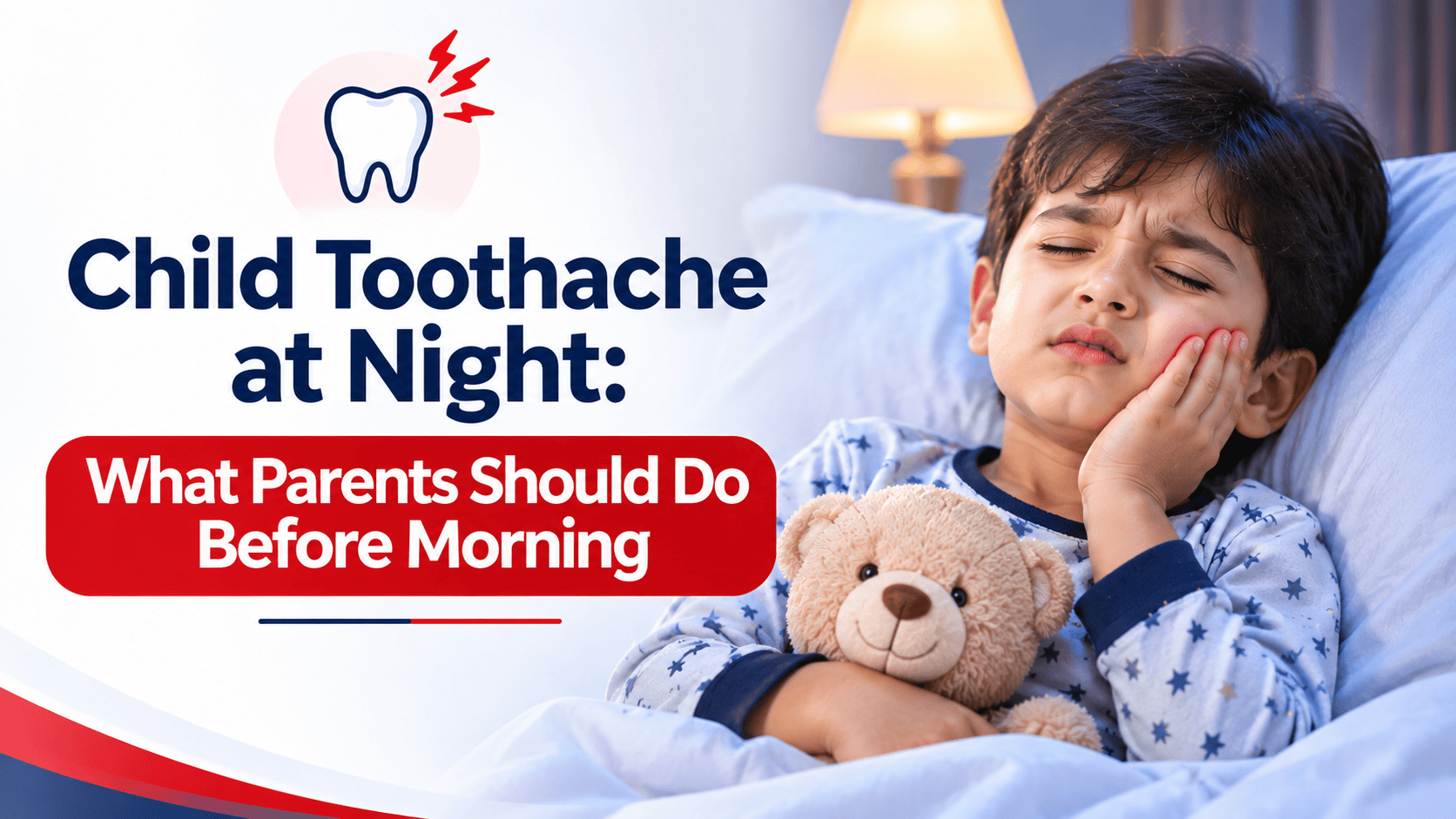
A toothache can turn a peaceful night into a stressful experience for both children and parents. Your child may wake up crying, complain of sharp pain, or struggle to fall asleep because of tooth or gum discomfort. When a dental appointment is not immediately available, knowing what to do can help you keep your child comfortable until morning.
Never ignore a toothache, even if the pain temporarily disappears. Cavities, dental infections, damaged teeth, and gum problems can all cause discomfort that requires professional evaluation.
In this guide, Smile Explorers Pediatric Dentistry explains how to manage a child’s toothache at night, recognize warning signs, and know when to seek emergency dental care.
Why Does a Child’s Toothache Get Worse at Night?
Tooth pain can feel more noticeable at bedtime because there are fewer distractions and children become more aware of discomfort when lying quietly. Lying down may also make some dental pain feel more intense.
Common causes of nighttime toothaches include:
- Tooth decay: Cavities can expose sensitive inner layers of a tooth and cause pain, particularly when eating or drinking.
- Dental infection: An infection inside a tooth or around its root may cause persistent or throbbing pain.
- Food trapped between teeth: Food particles can irritate the gums and create pressure or discomfort.
- Cracked or damaged teeth: A chipped or cracked tooth may hurt when your child bites down or consumes hot or cold foods.
- Newly erupting teeth: Teething or the eruption of permanent teeth can cause temporary gum tenderness.
- Gum irritation: Inflamed or irritated gums can make chewing and brushing uncomfortable.
Because these conditions can have similar symptoms, a pediatric dentist can help identify the actual cause and recommend appropriate treatment.
What Should Parents Do First When a Child Has a Toothache at Night?
If your child wakes up with tooth pain, try these steps to provide temporary relief while arranging dental care.
1. Check Your Child’s Mouth Gently
Use a light to look inside your child’s mouth. Check for visible cavities, food trapped between teeth, swelling, broken teeth, or irritated gums.
Avoid pressing on a painful tooth or attempting to drain a swollen area. If you notice facial swelling or your child appears seriously unwell, seek urgent medical attention.
2. Rinse With Warm Salt Water if Appropriate
If your child is old enough to rinse and spit reliably, have them gently rinse their mouth with warm salt water. This may help clear debris and soothe irritated tissues.
Do not use this method for toddlers or children who may swallow the solution.
3. Check for Food Stuck Between Teeth
Food trapped between teeth can sometimes cause discomfort. If your child can cooperate, gently floss around the affected teeth to remove any trapped food.
Do not force floss into an area that is extremely painful, bleeding heavily, or visibly swollen.
4. Apply a Cold Compress
If your child’s cheek is sore or swollen, place a cold pack wrapped in a soft towel against the outside of the cheek for short intervals.
Never apply ice directly to the tooth or skin. Avoid applying heat to facial swelling, as it may worsen discomfort.
5. Consider Age-Appropriate Pain Relief
If your child needs pain relief, children’s acetaminophen or ibuprofen may help when used according to the product label and your child’s age and weight.
Check with a pediatrician or pharmacist if you are unsure which medicine is appropriate. Ibuprofen may not be suitable for some children, including those who are dehydrated or have certain medical conditions.
Never give aspirin to children, and do not place aspirin, alcohol, or other home remedies directly on the tooth or gums. These substances can damage oral tissues.
Pain medicine provides temporary relief; it does not treat the underlying cause of a toothache.
6. Offer Soft Foods and Water
If your child is hungry, offer soft foods that require little chewing. Avoid very hot, cold, sweet, or hard foods if they trigger pain.
Encourage water and let your child rest in a comfortable position. If lying flat makes the pain worse, raising their head slightly with appropriate bedding may help an older child feel more comfortable.
When Is a Child’s Toothache a Dental Emergency?
Some toothaches can wait until a dentist opens, but others require immediate attention.
Seek emergency medical care immediately if your child has:
- Difficulty breathing or swallowing
- Rapidly spreading swelling of the face, mouth, or neck
- Swelling around the eye, particularly with fever or worsening symptoms
- Severe facial swelling accompanied by difficulty opening the mouth or appearing very unwell
These symptoms can indicate a serious infection that needs urgent treatment.
Contact an emergency dentist promptly if your child has persistent or severe tooth pain, gum swelling, pus, fever associated with dental symptoms, or a broken tooth. A child with fever and facial swelling needs urgent assessment rather than waiting until morning.
If the pain is mild, your child otherwise feels well, and there are no emergency warning signs, contact your pediatric dentist as soon as the office opens.
Can a Toothache Go Away on Its Own?
Sometimes a child’s toothache improves temporarily, especially if the irritation was caused by trapped food or a temporary sensitivity.
However, pain that disappears does not necessarily mean the problem has resolved. A cavity or infection may continue to develop even when symptoms improve.
Arrange a dental examination even if your child feels better the next morning. Early treatment can help prevent complications and may reduce the need for more extensive dental procedures.
How Can Parents Prevent Nighttime Toothaches?
Good oral hygiene and regular dental visits can help reduce the risk of tooth decay and dental discomfort.
Here are some habits to encourage at home:
- Brush twice daily: Help your child brush for two minutes using fluoride toothpaste appropriate for their age.
- Supervise brushing: Young children often need help to clean all tooth surfaces effectively.
- Limit sugary snacks and drinks: Frequent exposure to sugar increases the risk of cavities.
- Avoid bedtime bottles containing sugary drinks: Put your child to bed with water rather than juice or other sweetened drinks.
- Schedule regular dental checkups: Routine visits help identify cavities and other dental problems before they become painful.
- Ask about preventive treatments: Your dentist may recommend fluoride treatments or dental sealants based on your child’s individual needs.
Children should have their first dental visit by their first birthday or within six months of their first tooth erupting, whichever comes first.
When Should You Call a Pediatric Dentist?
You should contact a pediatric dentist if your child experiences recurring toothaches, sensitivity to hot or cold foods, pain while chewing, visible cavities, or gum swelling.
Even if your child can sleep after taking appropriate pain relief, arrange an examination as soon as possible. The dentist will evaluate the affected tooth and determine whether treatment such as a filling, pulp therapy, or another procedure is needed.
If you are looking for a pediatric dentist in Glendale, AZ, Smile Explorers Pediatric Dentistry provides dental care focused on children’s oral health and individual needs.
Our team serves families in Glendale and surrounding communities, including Deer Valley, Anthem, Norterra, and Arrowhead Ranch.
Do not wait for a toothache to become severe before seeking dental care. Early evaluation can help your child get relief and protect their developing smile.
Frequently Asked Questions
1. What can I give my child for a toothache at night?
Children’s acetaminophen or ibuprofen may provide temporary relief when appropriate for your child’s age, weight, and medical history. Follow the product label and consult a healthcare professional if you are unsure. Pain medication does not replace dental treatment.
2. Why does my child’s tooth hurt more when lying down?
Tooth pain may feel more intense at bedtime because there are fewer distractions, and lying down can make some types of dental discomfort more noticeable. Persistent or worsening pain should be evaluated by a dentist.
3. Should I take my child to the emergency room for a toothache?
Go to an emergency department immediately if your child has difficulty breathing or swallowing, rapidly spreading facial or neck swelling, or other signs of a serious infection. For a dental problem without these symptoms, an emergency dentist may be the appropriate first contact.
4. Can a cavity cause severe tooth pain at night?
Yes. A cavity can irritate the inner layers of a tooth and may cause sensitivity or persistent pain. Severe or spontaneous pain can indicate more advanced decay or inflammation and requires prompt dental evaluation.
5. Is it okay to wait until morning if my child’s tooth hurts?
If your child’s pain is manageable and there are no warning signs, you may be able to contact your dentist when the office opens. Severe pain, swelling, fever with dental symptoms, or a child who appears unwell warrants prompt assessment. Breathing or swallowing difficulties require emergency medical care.
6. How can I help my child sleep with a toothache?
You can try a cold compress, appropriate pain relief, and a comfortable resting position. Avoid trigger foods and do not apply aspirin or unverified remedies directly to the tooth. Seek dental care as soon as possible.
7. Does a baby tooth need treatment if it hurts?
Yes. Baby teeth play an important role in eating, speaking, and maintaining space for permanent teeth. A painful baby tooth should be examined to determine the cause and appropriate treatment.
Help Your Child Get Relief From Tooth Pain
A nighttime toothache can be upsetting, but knowing the warning signs and taking appropriate temporary measures can help you respond calmly.
If your child has a toothache, do not ignore recurring pain or assume the problem has disappeared when symptoms improve. A pediatric dentist can identify the cause and recommend treatment to help protect your child’s oral health.
Contact Smile Explorers Pediatric Dentistry to schedule an appointment and learn more about pediatric dental care in Glendale, Deer Valley, Anthem, Norterra, and Arrowhead Ranch, Arizona.
If your child has signs of a serious infection or difficulty breathing or swallowing, seek emergency care rather than waiting for a dental appointment.