


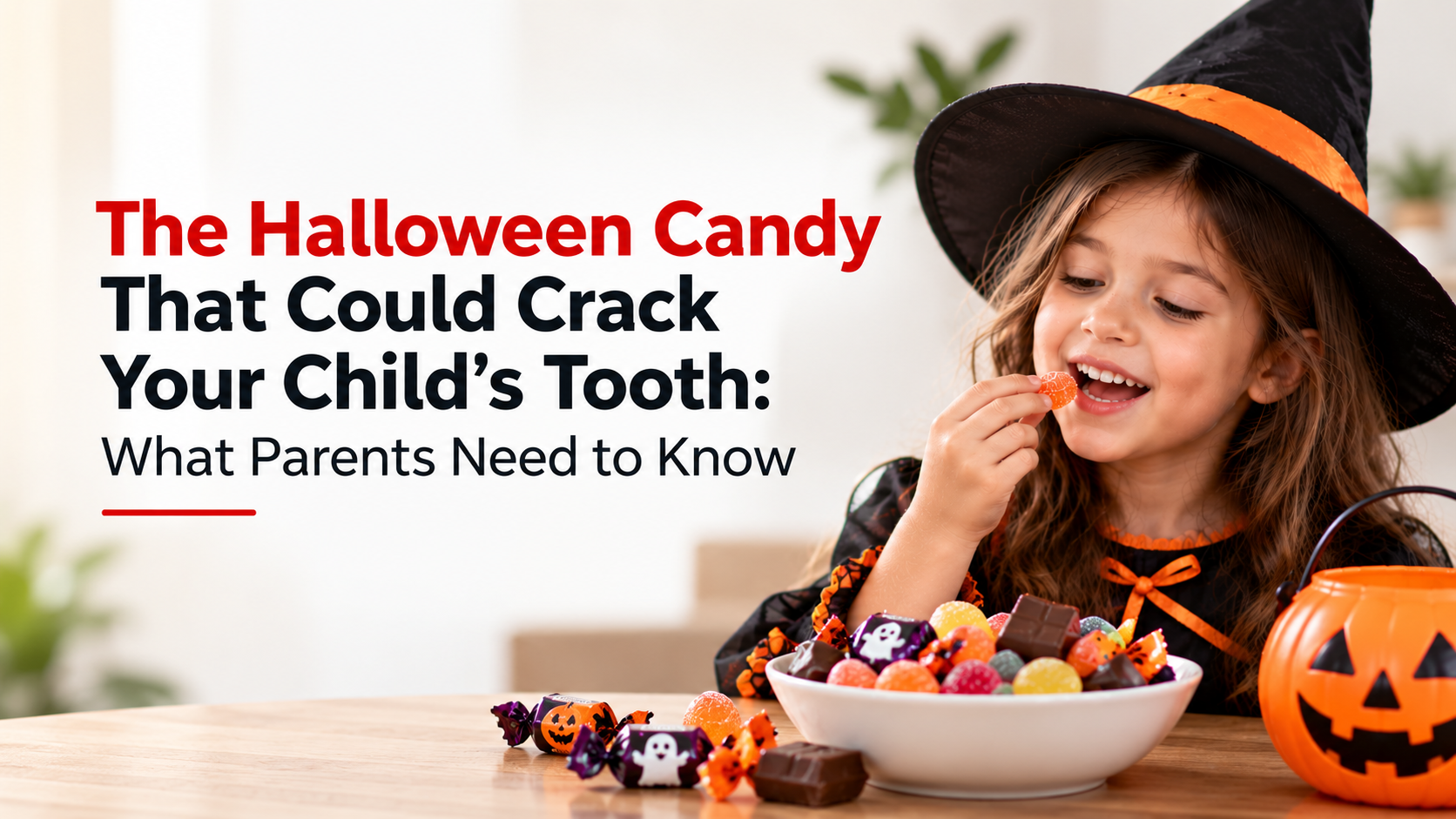
Halloween Candy and Tooth Safety
Halloween is one of those times of year kids look forward to for weeks. The costumes, trick-or-treating, and, of course, the candy!
But while your child is busy sorting through their Halloween haul, there’s something parents may not think about: some of those favorite treats can be surprisingly tough on little teeth.
A hard candy can crack a tooth when bitten. Sticky gummies can cling to the grooves of molars. And chewing on something unexpectedly hard can turn a fun Halloween night into an unexpected dental visit.
The good news? Your child doesn’t have to skip Halloween candy altogether. Knowing which treats to watch out for and how to protect their teeth can make the holiday a little less stressful for everyone.
At Smile Explorers Pediatric Dentistry, we want families to enjoy Halloween while keeping those growing smiles healthy.
1. Hard Candies: A Small Treat That Can Cause a Big Problem
Hard candies may seem harmless because they dissolve slowly. But the trouble often starts when children bite down on them instead of letting them melt.
Lollipops, jawbreakers, hard mints, and other crunchy candies can put significant pressure on a tooth.
If a tooth already has a cavity, a large filling, or weakened enamel, biting into something hard may increase the chance of a chip or fracture.
What parents can do: Encourage children to let hard candies dissolve rather than crunching them. For younger children, hard candies and lollipops can also present a choking risk, so age-appropriate treats matter.
And remember, even a tooth that doesn’t hurt immediately after a hard bite may still need attention if you notice a chip or crack.
2. Sticky Gummies and Caramel: The Candy That Won’t Let Go
If there’s one type of Halloween candy parents should be especially mindful of, it’s the sticky stuff.
Gummy bears, taffy, caramel, fruit chews, and similar treats can stick to the surfaces and grooves of children’s teeth.
The problem is that sticky candy can be difficult for saliva to wash away. When sugary residue stays around the teeth, cavity-causing bacteria can use those sugars to produce acids that damage enamel.
This can be particularly concerning around the back molars, where food and candy can get trapped.
Sticky sweets can also pull on loose fillings or dental restorations.
What parents can do: Offer sticky candy less often, encourage water after treats, and make sure children brush carefully before bedtime.
For kids with braces, retainers, or dental appliances, sticky candy can be especially troublesome. Check with your child’s orthodontist or dentist about which treats to avoid.
3. Popcorn and Candy With Hard Pieces
Not every Halloween treat comes in a colorful wrapper.
Popcorn balls, candy containing nuts, and sweets with hard pieces can also cause problems if a child bites down on an unexpectedly hard object.
Popcorn kernels and unpopped pieces can be particularly uncomfortable if they become trapped between teeth or under the gums.
For children with loose baby teeth, newly erupting permanent teeth, or existing dental problems, it’s worth being a little more cautious.
A simple tip: Before your child eats a treat, take a quick look at its ingredients and texture. If it contains very hard pieces, consider choosing something softer.
4. Sour Candy: Not So Sweet for Tooth Enamel
Sour candy is a Halloween favorite for many children, but its acidity is worth knowing about.
Many sour candies contain acids that give them their tangy taste. Frequent exposure to acidic foods and drinks can soften tooth enamel, making teeth more vulnerable to wear.
Combining acidic candy with frequent snacking throughout the evening can increase the amount of time teeth are exposed to acids and sugars.
What parents can do: Keep sour candy as an occasional treat rather than something children snack on throughout the day.
After eating sour candy, have your child rinse with water. It’s also a good idea to wait about 30 minutes before brushing, allowing softened enamel time to recover.
5. What About Chocolate?
Here’s some good news for chocolate lovers!
Plain chocolate, especially chocolate that melts easily, is generally less likely to stick to teeth than gummy or chewy candy.
That doesn’t mean chocolate is completely harmless. It still contains sugar, and frequent snacking can contribute to tooth decay.
But when choosing between different Halloween treats, plain chocolate can be a more tooth-friendly option than hard candy, sticky caramels, or sour gummies.
The key is moderation, enjoying treats with meals when possible, and maintaining a good brushing and flossing routine.
What Should You Do if Your Child Chips or Breaks a Tooth?
Even with careful supervision, accidents happen. A child might bite into a hard candy, fall while trick-or-treating, or bump their mouth during Halloween festivities.
If your child chips or breaks a tooth, try to stay calm. Here’s what you can do.
Step 1: Check Your Child’s Mouth
Look for bleeding, swelling, a visible chip, or a tooth that appears loose or displaced.
If your child is in pain, ask them to gently rinse their mouth with water.
If there is bleeding, apply gentle pressure with clean gauze.
Step 2: Save Any Broken Tooth Pieces
If you can find the broken piece, save it and bring it with you to the dental appointment.
Place it in a clean container. Your pediatric dentist can examine the tooth and determine whether the fragment is useful for treatment.
Step 3: Avoid Chewing on the Injured Tooth
Encourage your child to eat soft foods and avoid biting down on the affected area until a dentist has evaluated it.
If there is swelling, a cold compress applied to the outside of the cheek may help.
Step 4: Contact a Pediatric Dentist
A chipped tooth may not always be painful, but that doesn’t mean it should be ignored.
Contact your child’s dentist promptly if a tooth is cracked, broken, loose, or displaced.
If your child has severe pain, significant facial swelling, uncontrolled bleeding, or difficulty breathing or swallowing, seek urgent medical attention.
A knocked-out permanent tooth is a dental emergency and requires immediate professional care. A knocked-out baby tooth should not be placed back into the socket.
Getting the right care quickly can help protect your child’s developing smile.
6. How to Protect Your Child’s Teeth After Halloween
You don’t have to throw away every piece of candy to protect your child’s teeth.
A few simple habits can make a meaningful difference.
Set a candy routine. Rather than letting children snack on candy all day, offer a small portion after a meal.
Choose water. Water helps rinse away food particles and keeps the mouth hydrated.
Brush twice a day. Help younger children brush with fluoride toothpaste and make sure they clean all surfaces of their teeth.
Don’t forget flossing. Candy can get trapped between teeth, especially around the back molars.
Keep up with dental visits. Regular pediatric dental checkups help identify cavities, weakened teeth, and other concerns before they become more serious.
If your child has a history of cavities, braces, or dental restorations, ask your dentist about specific Halloween treats that may be better avoided.
Enjoy Halloween Without the Dental Fright!
Halloween should be about costumes, laughter, and making memories—not worrying about every piece of candy in your child’s bucket.
A little planning, sensible candy choices, and good brushing habits can help keep your child’s smile healthy throughout the holiday.
And if a Halloween treat leads to an unexpected dental problem, Smile Explorers Pediatric Dentistry is here to help.
Need a Pediatric Dentist in Arizona?
Whether your family is in Glendale, Deer Valley, Anthem, Norterra, or Arrowhead Ranch, Smile Explorers Pediatric Dentistry is committed to helping children feel comfortable and confident during their dental visits.
If your child chips a tooth, experiences dental pain, or needs a routine checkup after Halloween, contact your nearest Smile Explorers location to discuss the next steps.
Schedule your child’s dental visit with Smile Explorers Pediatric Dentistry and keep their little smile ready for every adventure!
Medical Disclaimer: This article is for general educational purposes and is not a substitute for professional dental advice, diagnosis, or treatment. Contact a qualified dental professional if your child experiences a dental injury or ongoing tooth pain.