


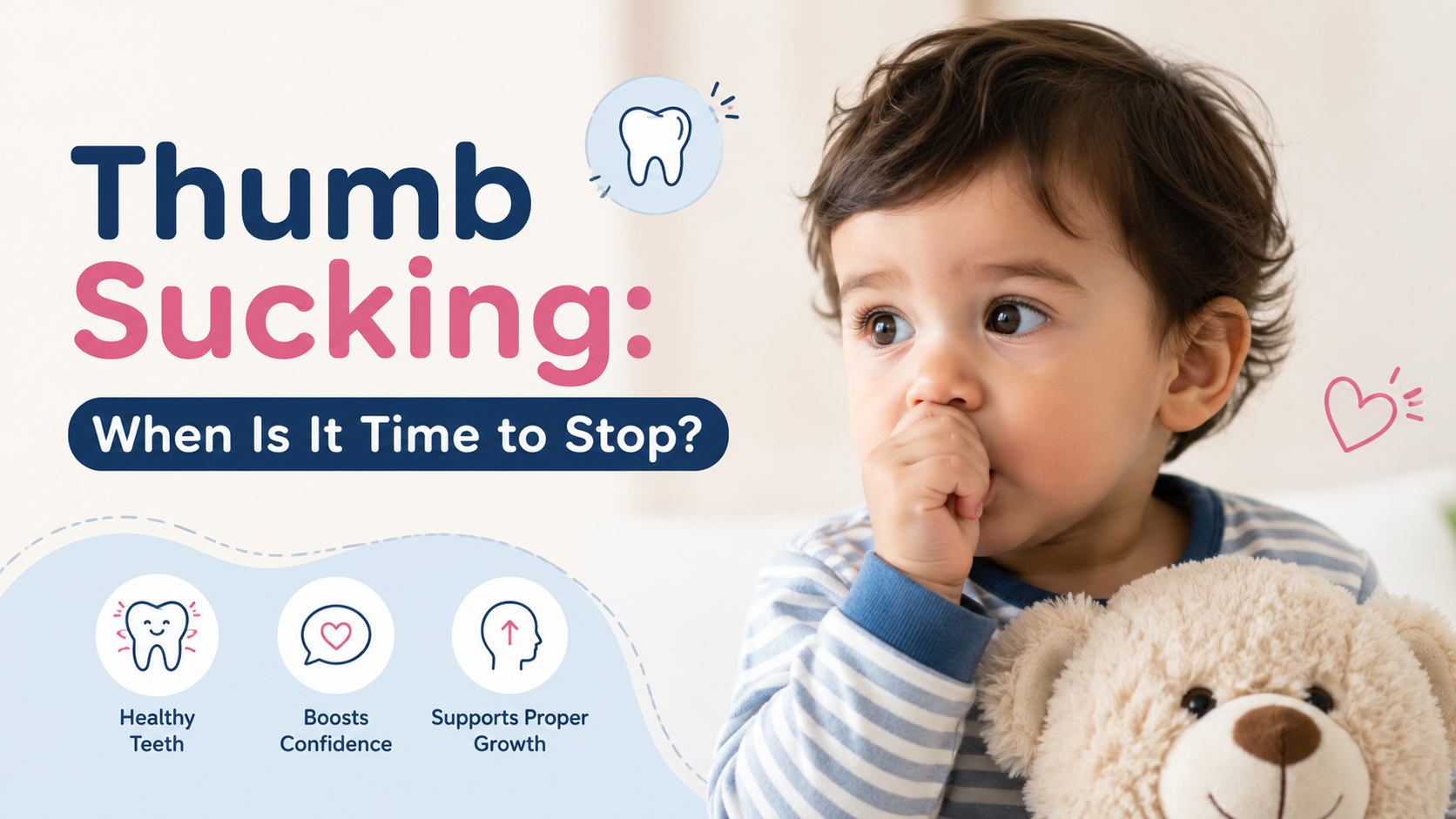
If you’ve ever caught your child happily sucking their thumb while falling asleep or watching their favourite show, you’re not alone. Thumb sucking is one of the most common habits in babies and young children, and it’s usually nothing to worry about.
In fact, many babies begin sucking their thumbs before they’re even born. For little ones, it’s a natural way to feel safe, calm, and comforted. The challenge for many parents is knowing when thumb sucking is simply a normal childhood habit—and when it may start affecting their child’s smile.
Why Do Children Suck Their Thumbs?
Babies are born with a natural sucking reflex. While this reflex helps them feed, it also gives them a sense of security. As children grow, they may continue sucking their thumb when they’re tired, anxious, bored, or trying to soothe themselves before bedtime.
Some children stop on their own by the time they’re toddlers, while others continue the habit a little longer. Every child is different, and that’s completely normal.
So, When Should Parents Be Concerned?
Here’s the reassuring news: most children naturally stop thumb sucking between the ages of 2 and 4.
If your child is still sucking their thumb occasionally during these early years, there’s usually no need to panic. Pediatric dentists understand that many children outgrow the habit without any intervention.
However, if thumb sucking continues after age 4 or once the permanent front teeth begin to erupt—typically around ages 5 or 6—it may be time for a conversation with your pediatric dentist.
Can Thumb Sucking Really Affect Teeth?
It can—but not every child who sucks their thumb will develop dental problems.
The biggest factors are how often, how long, and how firmly your child sucks their thumb. An occasional thumb sucker is much less likely to experience changes than a child who sucks their thumb for several hours every day or throughout the night.
Over time, persistent thumb sucking may contribute to:
- Teeth that begin to move out of alignment
- An open bite, where the upper and lower front teeth don’t meet
- Changes in jaw growth
- Bite problems that may require orthodontic treatment later
- Speech difficulties in some children
The earlier the habit is addressed, the less likely it is to affect your child’s developing smile.
Signs It May Be Time to Help Your Child Stop
Many parents ask us, “How do I know if it’s time?”
You may want to start encouraging your child to stop if:
- They’re older than 4 years.
- Permanent teeth are starting to appear.
- Thumb sucking happens throughout the day or every night.
- You notice changes in the way their teeth fit together.
- Your child wants to stop but struggles to break the habit.
If you’re unsure, your pediatric dentist can evaluate your child’s teeth and let you know whether the habit is affecting their oral development.
Gentle Ways to Help Your Child Break the Habit
Breaking a comforting habit takes patience. The goal isn’t to punish your child—it’s to support them.
Focus on Positive Encouragement
Children respond much better to praise than criticism. Celebrate small victories, whether it’s an afternoon without thumb sucking or falling asleep without the habit. Sticker charts or simple rewards can make the process fun rather than stressful.
Look for the Trigger
Does your child suck their thumb when they’re tired? Nervous? Watching television?
Understanding why they suck their thumb can help you replace the habit with another comforting activity, like reading together, cuddling with a favourite stuffed animal, or holding a soft blanket.
Keep Little Hands Busy
When children are engaged, they’re less likely to suck their thumbs. Crafts, colouring, puzzles, building blocks, and outdoor play are all great ways to keep little hands occupied.
Be Patient
Breaking a habit doesn’t happen overnight. Gentle reminders are much more effective than scolding or punishment, which can sometimes increase anxiety and make the habit harder to stop.
When Should You Visit a Pediatric Dentist?
Many parents wait until they notice crooked teeth before asking about thumb sucking, but it’s better to seek advice early.
A pediatric dentist can:
- Monitor how your child’s teeth and jaws are developing.
- Check whether thumb sucking is affecting their bite.
- Offer personalised tips based on your child’s age and habits.
- Recommend treatment only if it’s truly necessary.
Early guidance can often prevent more complicated dental or orthodontic issues in the future.
Every Child Develops at Their Own Pace
One of the most important things parents should remember is that thumb sucking isn’t a sign that something is wrong. For most children, it’s simply a comforting habit they eventually outgrow.
If your child needs a little extra help, that’s okay too. With patience, encouragement, and support from your pediatric dentist, most children are able to stop thumb sucking without tears or frustration.
The goal isn’t perfection—it’s protecting your child’s healthy, growing smile.
Let Smile Explorers Help
If you have questions about thumb sucking or you’re wondering whether it’s affecting your child’s teeth, we’re here to help.
At Smile Explorers Pediatric Dentistry, we believe every child deserves a positive dental experience. During regular checkups, we can monitor your child’s oral development, answer your questions, and provide gentle guidance that fits your family’s needs. Together, we can help your child grow into a confident, healthy smile.