


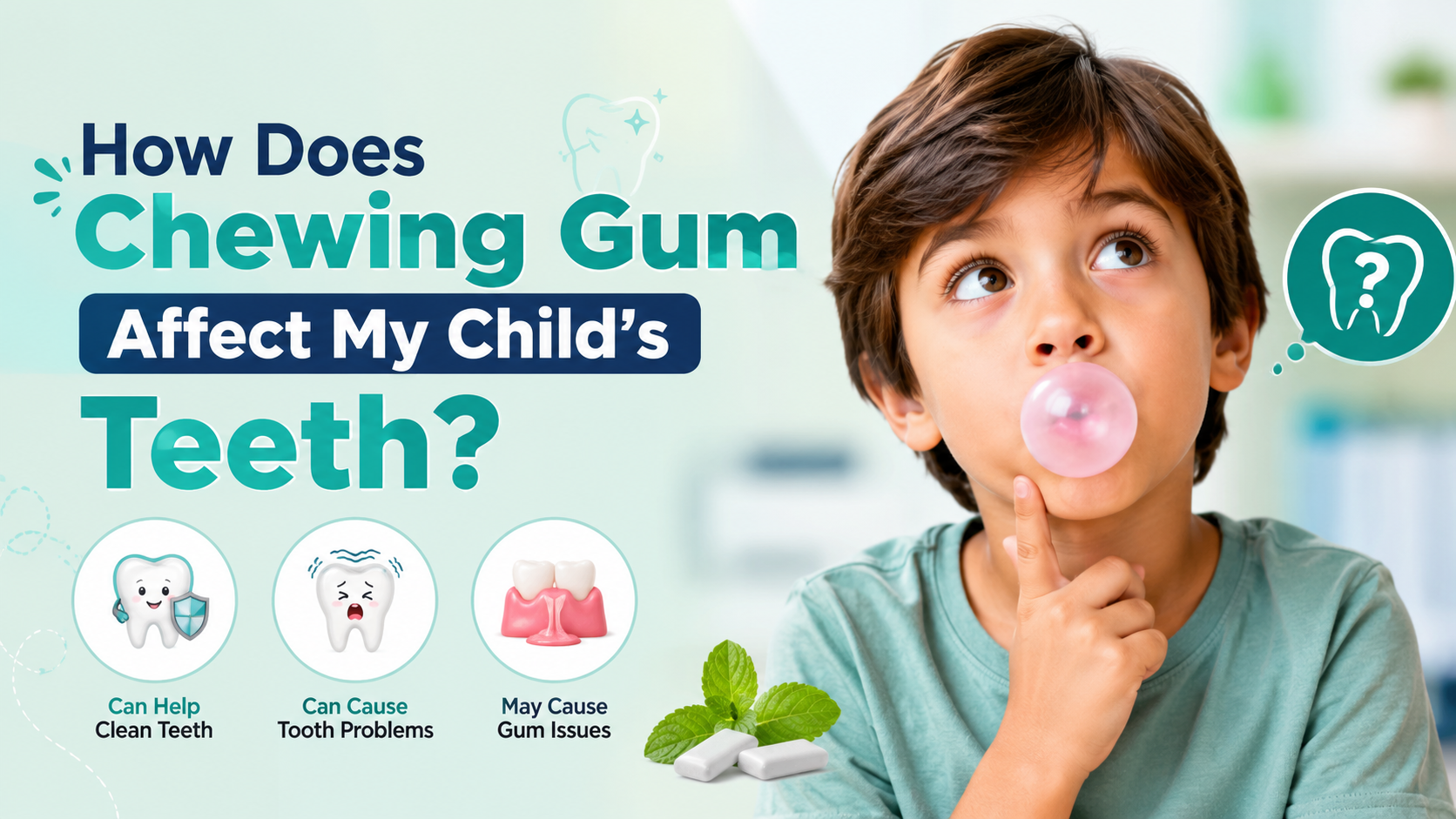
It happens more often than you might think. You’re standing in the grocery store checkout line when your child points to a pack of colorful chewing gum and asks, “Can I have one?” It seems like a simple request, but many parents hesitate because they’re unsure whether chewing gum is actually good for growing teeth.
The truth is, there isn’t a simple yes-or-no answer. How does chewing gum affect my child’s teeth? The answer depends on the type of gum your child chews, how often they chew it, and whether they already have healthy oral habits. While some sugar-free chewing gums can actually support dental health, sugary gum can increase the risk of cavities if consumed regularly.
As parents, understanding the difference can help you make better choices that protect your child’s smile while still allowing them to enjoy an occasional treat.
Is Chewing Gum Good or Bad for Children’s Teeth?
Chewing gum isn’t automatically harmful. In fact, pediatric dentists often recommend sugar-free gum for older children after meals because it encourages saliva production. Saliva plays a vital role in protecting teeth by washing away leftover food particles, neutralizing acids, and delivering important minerals that strengthen enamel.
However, chewing gum that contains sugar has the opposite effect. Harmful bacteria in the mouth feed on sugar and produce acids that slowly wear away tooth enamel, increasing the risk of cavities.
|
Type of Chewing Gum |
Effect on Children’s Teeth |
|
Sugar-Free Gum (Xylitol) |
Helps increase saliva and may reduce cavity risk |
|
Sugary Gum |
Increases bacteria and promotes tooth decay |
Choosing the right type of gum makes all the difference.
How Sugar-Free Chewing Gum Benefits Your Child’s Teeth
Many parents are surprised to learn that chewing sugar-free gum can actually offer several oral health benefits when used correctly.
Increases Saliva Production
One of the biggest benefits of chewing gum is that it stimulates saliva flow. Saliva is the mouth’s natural defense system. It rinses away food debris, neutralizes harmful acids, and helps keep the mouth clean between brushing sessions.
Helps Protect Tooth Enamel
Every time your child eats sugary or starchy foods, acids attack their tooth enamel. Increased saliva helps restore minerals like calcium and phosphate, making enamel stronger and more resistant to decay.
Helps Wash Away Food Particles
Children often snack throughout the day, and tiny food particles can remain trapped between teeth. Chewing sugar-free gum after meals can help loosen and wash away some of these particles until brushing is possible.
Freshens Breath
Bad breath in children is often caused by leftover food or bacteria. Sugar-free gum temporarily freshens breath while increasing saliva that naturally cleans the mouth.
The Risks of Sugary Chewing Gum
Not all chewing gum is created equal.
Traditional chewing gums made with sugar provide food for harmful bacteria. These bacteria produce acids that gradually weaken enamel and create cavities.
Frequent chewing of sugary gum may also:
- Increase plaque buildup
- Raise the risk of tooth decay
- Leave sticky sugar on teeth
- Encourage frequent sugar cravings
If your child enjoys chewing gum regularly, switching to a sugar-free option is a much healthier choice.
Why Xylitol Is Recommended by Many Dentists
One ingredient you’ll often see in sugar-free gum is xylitol, a naturally occurring sweetener.
Unlike regular sugar, xylitol cannot be used by cavity-causing bacteria to produce harmful acids. Research suggests that xylitol may even reduce the amount of harmful bacteria in the mouth over time.
Some benefits of xylitol gum include:
- Helps reduce cavity-causing bacteria
- Encourages healthy saliva flow
- Supports stronger tooth enamel
- Helps lower the risk of tooth decay
While xylitol gum can be beneficial, it should still be used as part of a complete oral hygiene routine—not as a replacement for brushing or flossing.
At What Age Can Children Safely Chew Gum?
Every child develops differently, but many pediatric dentists recommend waiting until a child is around 4 to 5 years old before introducing chewing gum.
Before giving your child gum, make sure they can:
- Understand not to swallow gum
- Chew safely without choking
- Follow simple instructions
- Dispose of gum properly after chewing
Children younger than this may accidentally swallow gum or have difficulty chewing it safely.
How Long Should Children Chew Gum?
Moderation is important.
Experts generally recommend chewing sugar-free gum for 10 to 20 minutes after meals. This provides enough time to stimulate saliva without placing unnecessary stress on the jaw muscles.
Chewing gum all day isn’t recommended, as excessive chewing may lead to jaw discomfort in some children.
Can Chewing Gum Replace Brushing?
Absolutely not.
Although sugar-free gum offers several oral health benefits, it cannot remove plaque the way brushing and flossing can.
A healthy dental routine should always include:
- Brushing twice a day with fluoride toothpaste
- Flossing once daily
- Drinking plenty of water
- Eating a balanced diet
- Visiting a pediatric dentist every six months
Chewing gum should simply be viewed as an extra tool—not the main solution for keeping teeth healthy.
Tips for Parents Choosing Chewing Gum
If you decide to let your child chew gum, keep these simple tips in mind:
- Choose sugar-free gum with xylitol whenever possible.
- Avoid gum that contains added sugar.
- Limit chewing to after meals.
- Teach children never to swallow gum.
- Supervise younger children while chewing.
- Continue regular brushing and flossing every day.
Making smart choices today can help protect your child’s smile for years to come.
Final Thoughts
So, how does chewing gum affect your child’s teeth? The answer depends on the kind of gum they chew and how it’s used. Sugar-free gum—especially varieties made with xylitol—can help stimulate saliva, protect tooth enamel, and support better oral health when chewed after meals. On the other hand, sugary gum can contribute to cavities and should be limited.
Chewing gum should never replace brushing, flossing, or regular dental visits, but it can be a helpful addition to a healthy oral care routine. By choosing the right gum and encouraging good dental habits, parents can help their children enjoy strong, healthy smiles as they grow.
Caring for Your Child’s Smile with Smile Explorers
At Smile Explorers Pediatric Dentistry, we believe that healthy habits start early. Our experienced pediatric dental team is here to answer your questions, provide preventive care, and help your child develop lifelong oral health habits in a fun and comfortable environment.
Whether your child needs a routine dental checkup, cavity prevention, fluoride treatment, or personalized dental advice, we’re here to help every step of the way.
Schedule an appointment with Smile Explorers Pediatric Dentistry today and give your child the healthy, confident smile they deserve.