


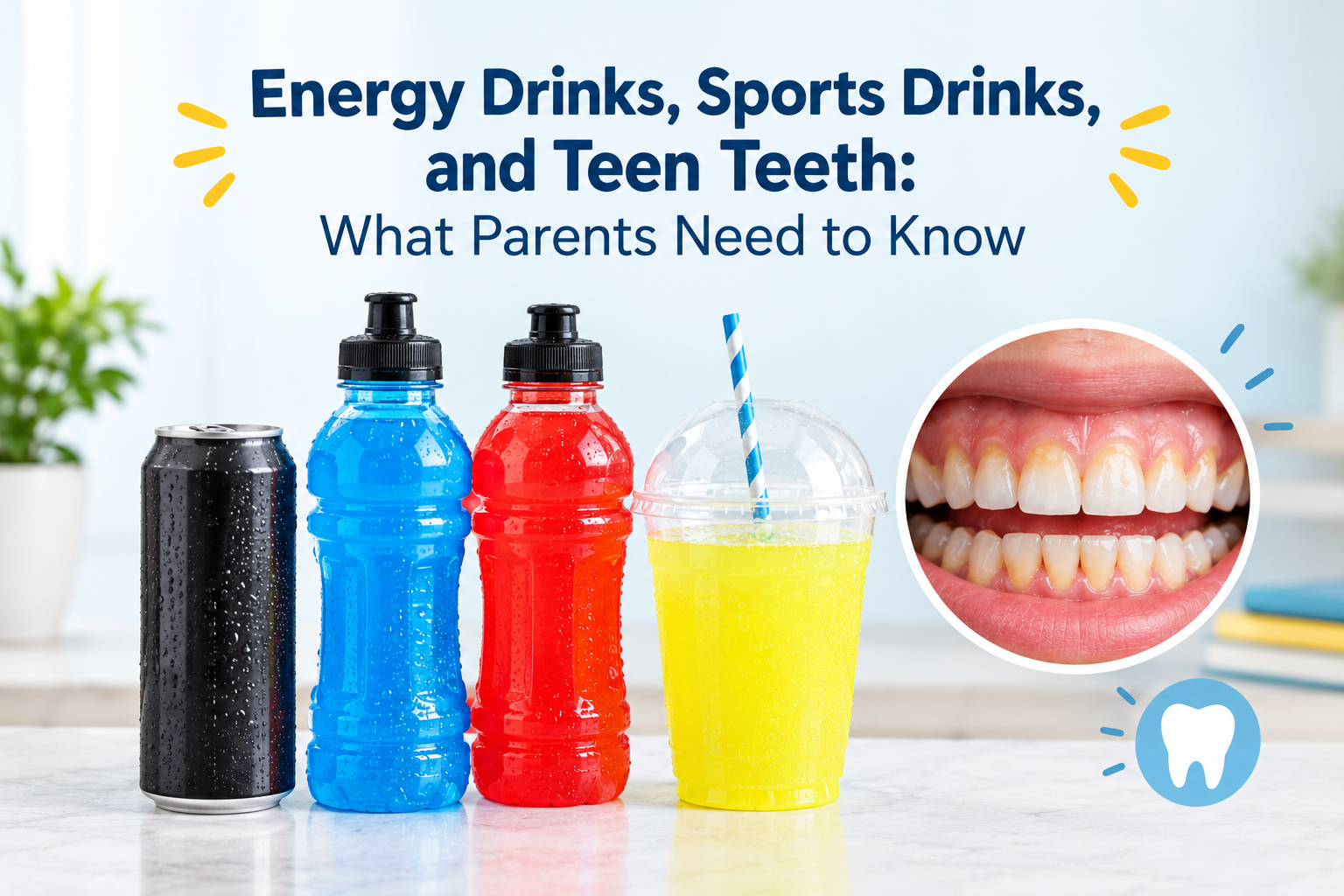
Teenagers have busy schedules. Between school, sports practice, homework, and time with friends, it is easy for them to reach for an energy drink or sports drink when they feel tired or thirsty. These drinks are widely available, and their colorful packaging and fitness-focused marketing can make them seem like a smart choice.
But have you ever wondered what these drinks are doing to your teenager’s teeth?
Many energy drinks and sports drinks contain added sugar, acids, or both. Regular exposure can increase the risk of cavities and gradually wear away tooth enamel, the protective outer layer of the teeth. Understanding the difference between these drinks and knowing a few simple ways to protect your child’s smile can make a real difference.
At Smile Explorers Pediatric Dentistry, we believe that helping parents understand everyday dental habits is an important part of keeping growing smiles healthy.
Are Energy Drinks and Sports Drinks Bad for Your Teen’s Teeth?
They can be, especially when consumed frequently.
The main concerns are sugar and acidity. Sugary drinks provide fuel for bacteria in the mouth, which produce acids that contribute to tooth decay. Acidic drinks can also soften and wear away enamel directly, a process known as dental erosion. These are two different problems, and some beverages can contribute to both. American Dental Association
Here is what parents should know about each type of drink.
1. Energy Drinks: More Than Just a Caffeine Concern
Energy drinks are marketed as a quick way to feel alert and energized. Teenagers may reach for them during exams, late-night study sessions, or busy days.
However, many energy drinks contain caffeine, and some also contain substantial amounts of added sugar and acids.
From a dental perspective, the biggest concerns include:
- Enamel erosion: The acids in many energy drinks can gradually weaken the tooth surface.
- Cavities: Sugary varieties can increase the risk of tooth decay, particularly with frequent sipping.
- Tooth sensitivity: Enamel erosion may eventually expose the more sensitive layer beneath the enamel.
- Dry mouth: Caffeine may contribute to dry-mouth symptoms in some people, potentially reducing the protective benefits of saliva.
There is another important consideration: energy drinks are not recommended for children and adolescents because of their stimulant content. Water, regular meals, adequate sleep, and a balanced diet are better ways to support a teenager’s daily energy needs.
2. Sports Drinks: Are They Necessary After Every Workout?
Sports drinks are designed to provide fluids and, depending on the product, carbohydrates and electrolytes lost during prolonged, vigorous exercise.
That does not mean every young athlete needs one.
For most everyday activities, including a typical school day, a short football practice, or a routine workout, plain water is generally sufficient. Sports drinks may have a role during prolonged, intense physical activity, especially when an athlete needs to replace carbohydrates and electrolytes.
The dental concern is that many sports drinks contain sugar and acids. Repeated exposure during practice, particularly when a teenager takes small sips throughout a session, can increase the time teeth spend in contact with these substances.
A useful rule for parents: Keep water as the everyday drink of choice, and do not assume that a drink marketed for athletes is automatically better for your teenager’s teeth.
3. What Is the Difference Between Cavities and Enamel Erosion?
These problems are often confused, but they are not the same.
Tooth decay and cavities
When bacteria in the mouth break down sugars, they produce acids that attack the teeth. Repeated acid attacks can lead to mineral loss and eventually cavities.
Enamel erosion
Enamel erosion happens when acids directly dissolve minerals from the tooth surface. These acids can come from drinks, foods, or other sources.
Unlike early mineral loss from some acid attacks, lost enamel does not grow back. A dentist can recommend ways to protect the remaining enamel and manage any resulting sensitivity.
A drink can contribute to both conditions. That is why looking only at the sugar content on a nutrition label does not tell the whole story.
4. Warning Signs Parents Should Watch For
Dental damage does not always cause pain in the early stages. Still, there are a few signs worth paying attention to, especially if your teenager regularly drinks energy or sports beverages.
Watch for:
- Sensitivity to cold drinks: Your teenager complains that cold water or ice cream makes their teeth uncomfortable.
- Changes in tooth appearance: Teeth begin to look unusually smooth, shiny, yellowish, or worn.
- Frequent cavities: Your teenager develops new cavities despite brushing regularly.
- Discomfort while eating: Certain foods or drinks trigger sensitivity or pain.
- Visible changes to tooth edges: Teeth appear more worn or chipped than before.
These signs can have several causes, so they do not automatically mean that energy or sports drinks are responsible. A pediatric dentist can examine the teeth and recommend appropriate care.
5. Simple Ways to Protect Your Teenager’s Teeth
You do not necessarily need to turn every drink choice into an argument. A few practical habits can help teenagers make better decisions while maintaining their independence.
Choose water more often
Encourage your teenager to carry a reusable water bottle to school, sports practice, and other activities. Water is generally the best everyday choice for hydration and does not expose teeth to the sugars and acids found in many flavored beverages.
Avoid sipping acidic drinks throughout the day
Finishing a beverage in a shorter period is generally preferable to sipping it continuously for hours. Frequent exposure gives teeth less time between acid attacks.
Rinse with water afterward
If your teenager drinks an acidic sports or energy drink, rinsing with plain water afterward can help clear away some of the remaining acids and sugars.
Wait before brushing
Acid temporarily softens the tooth surface. Brushing immediately afterward may increase enamel wear. Encourage your teenager to wait around 30–60 minutes after consuming an acidic drink before brushing.
Brush with fluoride toothpaste
Teens should brush twice daily with fluoride toothpaste and clean between their teeth every day. Fluoride helps strengthen enamel and supports the repair of early mineral loss.
Keep regular dental appointments
Routine dental visits allow a pediatric dentist to identify early signs of tooth decay, erosion, or sensitivity and recommend preventive care before problems become more serious.
6. How Can Parents Help Teens Make Healthier Drink Choices?
Teenagers are more likely to adopt healthy habits when they understand the reasons behind them.
Instead of simply saying that energy drinks are bad, explain how sugar and acids affect their teeth. Encourage them to compare nutrition labels, look for added sugars, and understand that a sugar-free drink may still be acidic.
You can also make water the convenient choice at home, keep reusable bottles available, and offer water during family outings and sports activities.
Most importantly, lead by example. When the whole family develops healthier beverage habits, it becomes easier for teenagers to follow along.
Help Your Teen Keep Their Smile Healthy
Healthy teeth are built on everyday habits. Choosing water more often, limiting sugary and acidic beverages, brushing with fluoride toothpaste, and attending regular dental checkups can all help protect your teenager’s smile.
If your teen experiences tooth sensitivity, develops frequent cavities, or has noticeable changes in their teeth, a dental evaluation can help identify the cause and determine the next steps.
Looking for a pediatric dentist for your teenager? Smile Explorers Pediatric Dentistry provides dental care for growing smiles, from preventive checkups to guidance on everyday oral health habits. Contact our team to learn more or schedule an appointment at a convenient location.
Healthy habits today can help protect your teenager’s smile for years to come.