


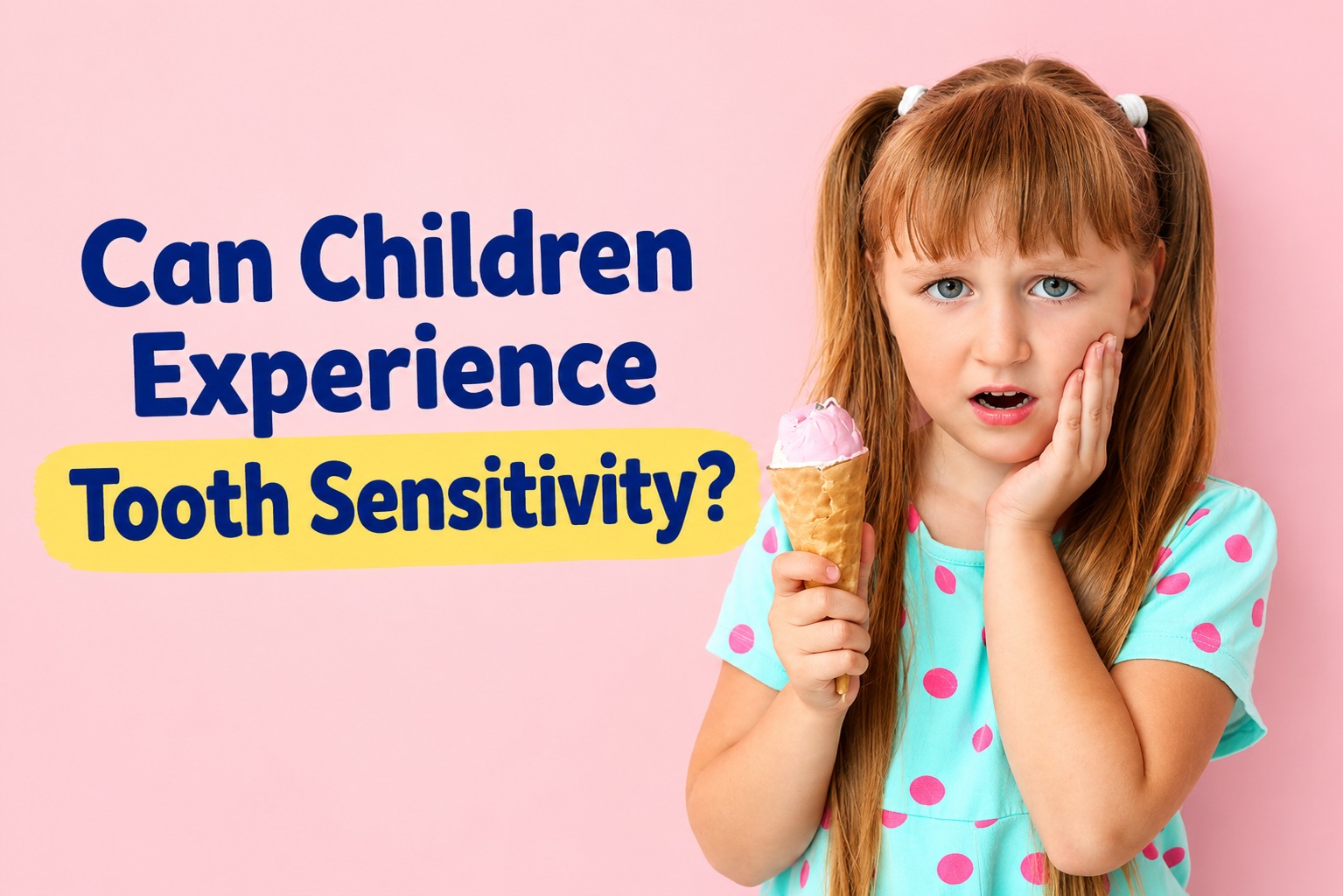
Yes, children can experience tooth sensitivity. If your child suddenly complains that their teeth hurt when eating ice cream, drinking something cold, eating sweets, or even brushing, tooth sensitivity may be one possible reason. For parents, it can be difficult to know whether the discomfort is simply temporary or a sign of a dental problem. Children may describe sensitivity as a “hurt,” “sting,” or “funny feeling,” and younger children may not be able to explain exactly where the discomfort is coming from. The good news is that tooth sensitivity in children is often manageable once the underlying cause is identified. Cavities, enamel wear, newly erupting teeth, dental injuries, and certain brushing habits can all contribute to sensitivity.
What Is Tooth Sensitivity?
Tooth sensitivity happens when the inner layers of a tooth become more exposed or vulnerable to outside stimulation. The outside of a tooth is protected by enamel. Underneath the enamel is dentin, which contains microscopic pathways that can transmit sensations toward the nerve inside the tooth. When dentin becomes exposed because of enamel wear, decay, a crack, or another dental issue, certain triggers may cause a short, sharp sensation. A child with sensitive teeth may notice discomfort when exposed to:-
- Cold drinks or ice cream
- Hot foods or beverages
- Sweet foods
- Sour or acidic foods
- Tooth brushing
- Cold air
- Biting or chewing
Not every episode of tooth pain means a child has sensitive teeth, though. A pediatric dental examination can help determine what is actually causing the discomfort.
What Causes Tooth Sensitivity in Children?
There isn’t one single cause of tooth sensitivity in children. Some causes are temporary, while others may require dental treatment.
1. Cavities and Tooth Decay
Cavities are a common reason children may experience tooth sensitivity. As tooth decay progresses, it can weaken the enamel and affect the deeper layers of the tooth. A child may begin to complain about sensitivity when eating sweets or drinking something cold. If the sensitivity consistently affects one particular tooth, parents should not assume it will disappear on its own. A dental examination can determine whether decay or another problem is involved.
2. Newly Erupting Permanent Teeth
Children can sometimes experience temporary discomfort as their permanent teeth come in. During the transition from baby teeth to permanent teeth, the mouth is going through significant changes. Some children may notice sensitivity or tenderness around newly erupting teeth. However, ongoing or worsening discomfort should still be evaluated rather than automatically attributed to normal tooth eruption.
3. Enamel Wear or Enamel Defects
Enamel protects the more sensitive structures underneath the tooth. If enamel becomes worn or develops improperly, teeth may become more sensitive. Frequent exposure to acidic foods and drinks can contribute to enamel erosion. In some children, enamel may also have developed differently, making certain teeth more vulnerable. A pediatric dentist can examine the enamel and determine whether additional preventive care is needed.
4. Brushing Too Hard
Brushing is essential for healthy teeth, but more pressure does not mean cleaner teeth. Children who brush aggressively may irritate their gums or contribute to enamel wear over time. A soft-bristled toothbrush and gentle brushing technique are generally better choices. Parents can help younger children learn how to brush thoroughly without using excessive force.
5. Cracked, Chipped, or Injured Teeth
Children are active, and falls, sports injuries, or accidents can sometimes damage a tooth. A small crack or chip may not always be obvious. However, the tooth may become sensitive when the child bites, chews, or drinks something cold. If sensitivity begins after an injury, it is important to have the tooth checked, even when there is no major visible damage.
6. Dental Treatment
Some children may experience temporary sensitivity following certain dental procedures. For example, a tooth that has recently received treatment may feel different for a short period. Your pediatric dentist can explain what type of discomfort is expected and when you should contact the office again. If pain is severe, continues, or becomes worse instead of improving, the child should be evaluated.
7. Teeth Grinding
Some children grind or clench their teeth, particularly during sleep. Repeated grinding can put additional stress on the teeth and may contribute to enamel wear or dental discomfort. If you notice frequent nighttime grinding along with tooth sensitivity, mention it during your child’s dental visit.
How Can Parents Tell If a Child Has Sensitive Teeth?
Children do not always use the words “tooth sensitivity.” Instead, parents may notice changes in their behavior. Look for signs such as:
- Complaining when drinking cold water
- Avoiding ice cream or cold foods
- Saying that sweets make a tooth hurt
- Pulling away while brushing
- Chewing on only one side of the mouth
- Avoiding certain foods
- Complaining about pain when biting
- Repeatedly pointing to the same tooth
Younger children may simply become upset during meals or brushing without being able to explain why. Paying attention to when the discomfort occurs can provide useful information for the pediatric dentist.
When Should You Take Your Child to a Pediatric Dentist?
Occasional, short-lived sensitivity may not always indicate a serious problem, but recurring or unexplained tooth pain should not be ignored. Schedule a dental evaluation if your child:
- Has repeated sensitivity
- Has pain in one specific tooth
- Avoids eating because of discomfort
- Has pain when biting or chewing
- Has a visible cavity, crack, or chip
- Develops swelling around the tooth or gums
- Experiences sensitivity after a dental injury
- Has pain that is becoming more frequent or severe
A dentist can examine the teeth and gums and determine whether the sensitivity is related to decay, enamel concerns, eruption, injury, or another condition.
How Is Tooth Sensitivity in Children Treated?
Treatment depends on the underlying cause. For some children, improving brushing habits and protecting the enamel may be enough. In other cases, professional dental treatment may be necessary. Depending on the situation, a pediatric dentist may recommend:
Fluoride Protection
Fluoride helps strengthen tooth enamel and can be an important part of children’s preventive dental care. Your dentist can recommend the appropriate fluoride care based on your child’s age and individual needs.
Treating Cavities
If tooth sensitivity is caused by decay, treating the cavity can address the underlying problem and help protect the tooth from further damage.
Repairing a Damaged Tooth
A cracked, chipped, or significantly damaged tooth may require restorative treatment to protect it and restore normal function.
Improving Brushing Habits
A soft toothbrush, gentle pressure, and proper brushing technique can help protect the enamel and gums.
Managing the Underlying Cause
If sensitivity is connected to teeth grinding, enamel concerns, eruption, or another condition, the pediatric dentist can recommend an appropriate approach after examining your child. Parents should avoid choosing dental treatments or sensitivity products based only on age or online recommendations. The right approach depends on the child’s teeth, age, symptoms, and underlying cause.
How Can You Help Prevent Sensitive Teeth?
Good daily habits can help protect your child’s teeth and reduce the risk of problems that may contribute to sensitivity. Encourage your child to:-
- Brush twice a day using an age-appropriate fluoride toothpaste
- Use a soft-bristled toothbrush
- Brush gently rather than aggressively
- Clean between teeth as recommended by their dentist
- Limit frequent sugary snacks and drinks
- Avoid excessive acidic drinks
- Drink water regularly
- Wear appropriate protective equipment during sports
- Visit a pediatric dentist regularly
Regular dental examinations are particularly important because children may not always recognize or communicate early dental problems.
Why Regular Pediatric Dental Visits Matter
Children’s teeth are constantly changing. Baby teeth eventually make way for permanent teeth, while the jaw and mouth continue developing. Regular pediatric dental visits allow the dentist to monitor this development and identify problems before they become more complicated. Smile Explorers recommends starting dental visits early, with the first visit around the time a child’s first tooth appears or by their first birthday. At Smile Explorers Pediatric Dentistry, children receive age-appropriate dental care in a child-friendly environment. The practice provides services including cleanings, fluoride treatments, dental sealants, emergency pediatric dentistry, and care for children with special needs.
Can Tooth Sensitivity in Children Go Away on Its Own?
Sometimes, sensitivity can be temporary. For example, a child may experience short-term discomfort around a newly erupting tooth or following certain dental situations. But persistent or recurring sensitivity deserves attention. The important question isn’t simply, “How do I stop my child’s sensitive teeth?” It is “Why is the tooth sensitive?” Finding the cause is the best way to decide whether your child needs preventive care, monitoring, or dental treatment.
Help Your Child Feel Comfortable About Dental Care
If your child is experiencing tooth sensitivity, you don’t have to guess what’s causing it. A pediatric dental examination can help identify the problem and determine the most appropriate next step. At Smile Explorers Pediatric Dentistry in Glendale, AZ, Dr. Mukul Dave and the team provide gentle, child-focused dental care for infants, toddlers, children, and teens. The practice serves families in Glendale, Deer Valley, Anthem, Norterra, and surrounding areas. If your child is complaining about sensitive teeth, contact Smile Explorers to schedule a dental evaluation and get personalized guidance for their smile.
Call Smile Explorers Pediatric Dentistry at 623-322-2277 or request an appointment online.