


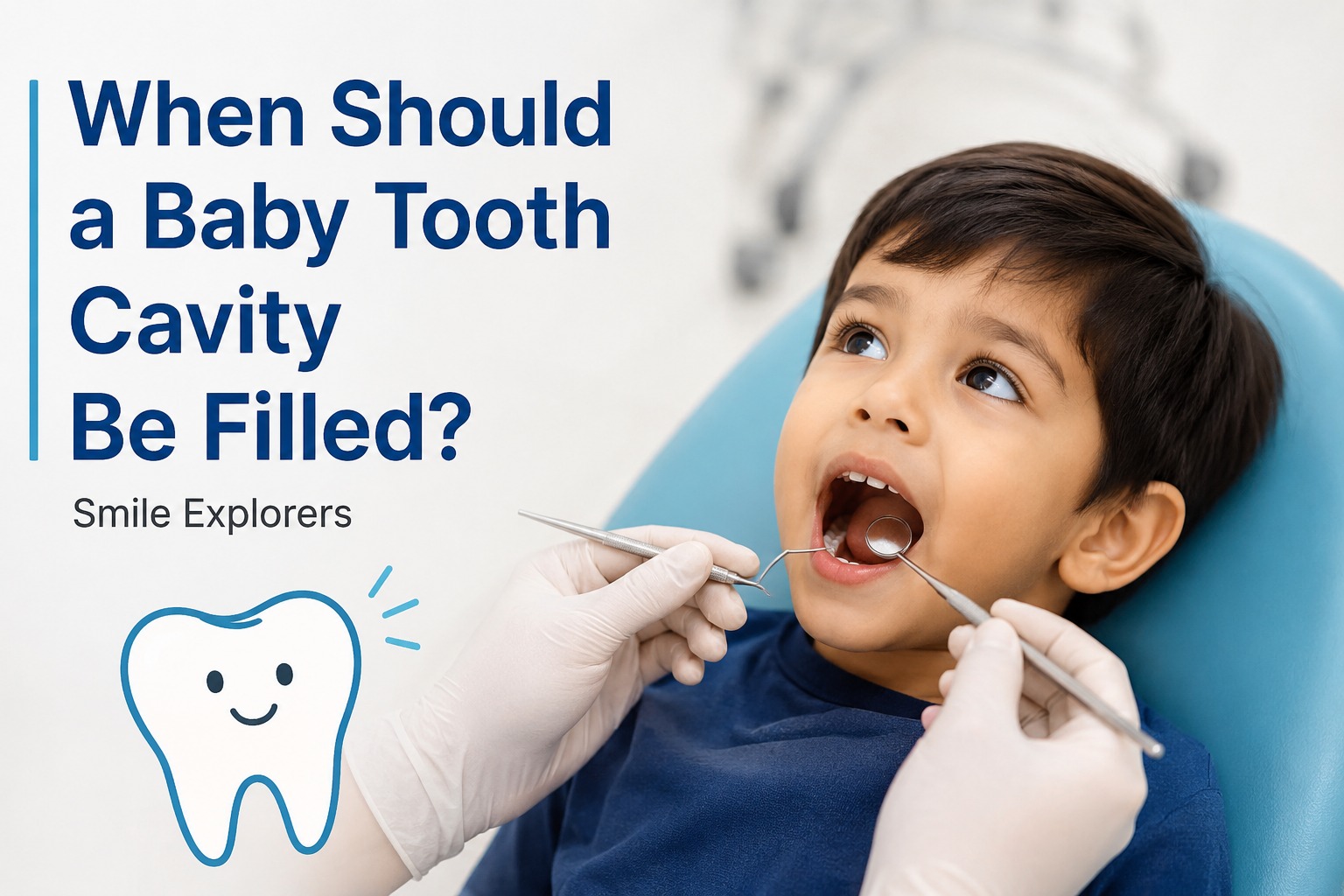
Finding a cavity in your child’s baby tooth can leave you with a lot of questions. “Does my child really need a filling if that tooth is eventually going to fall out?” It is a common concern. Baby teeth are temporary, but they still have important work to do. They help children chew, speak, smile, and maintain the space needed for permanent teeth. The good news is that not every early area of tooth decay requires a traditional filling. The right treatment depends on the condition of the tooth, how far the decay has progressed, your child’s age, symptoms, cavity risk, and how long the tooth is expected to remain in the mouth. For families searching for a pediatric dentist in Glendale, AZ, knowing when a cavity needs treatment can make dental decisions much easier. At Smile Explorers Pediatric Dentistry, children receive individualized dental care in a comfortable, child-focused environment. The practice serves families throughout Glendale, Deer Valley, Anthem, Norterra, Arrowhead Ranch, and surrounding communities.
Why Should Baby Teeth Be Protected?
It can be tempting to think that baby teeth do not matter because permanent teeth will eventually replace them. But your child’s primary teeth serve several important purposes. Healthy baby teeth help children:-
- Chew food comfortably
- Develop clear speech
- Maintain space for permanent teeth
- Support normal oral development
- Guide permanent teeth as they erupt
- Avoid unnecessary dental discomfort
A baby tooth that is lost much earlier than expected may create changes in the available space for developing permanent teeth. Depending on the tooth and your child’s development, a pediatric dentist may consider whether a space maintainer is appropriate. That is why dentists generally try to keep a baby tooth healthy and functional for as long as it is needed.
How Can You Tell If Your Child Has a Cavity?
Cavities are not always easy for parents to spot. Early tooth decay may appear as a white, chalky area on the tooth. As decay progresses, you may notice a darker spot, rough surface, or visible hole. Your child may also experience:-
- Tooth sensitivity
- Pain while eating
- Discomfort with cold or sweet foods
- Avoiding certain foods
- Chewing on one side
- Swelling around the tooth
- Increased fussiness without an obvious reason
Some children have no symptoms at all. That is one reason routine pediatric dental examinations are important. A dentist can identify problems that may not yet be obvious at home. Smile Explorers recommends beginning dental care early. Its first-visit guidance follows pediatric recommendations to schedule a child’s first dental visit when the first tooth appears or by the first birthday.
What Causes Cavities in Baby Teeth?
Tooth decay develops when bacteria in the mouth interact with sugars and produce acids that gradually weaken tooth enamel. Several everyday habits can increase a child’s risk.
Frequent Sugary Snacks:- Eating sugary foods repeatedly throughout the day gives cavity-causing bacteria more opportunities to produce acids. Candy, cookies, sweetened cereals, fruit snacks, and similar foods can contribute to tooth decay when consumed frequently.
Sugary Drinks:- Juice, soda, sweetened drinks, and other beverages containing added sugar can increase a child’s exposure to sugars. For everyday hydration, water is usually a better choice.
Incomplete Brushing:- Young children are still developing the coordination needed to brush every tooth thoroughly. Parents may need to help or supervise brushing to make sure plaque is removed effectively.
Skipping Dental Visits:- Regular dental visits allow a pediatric dentist to monitor developing teeth and identify potential problems early. For parents in Glendale and Deer Valley, having a local pediatric dental office can make it easier to keep routine visits on schedule.
Does Every Baby Tooth Cavity Need a Filling?
No—not necessarily. This is one of the most important things parents should understand. Early tooth decay may sometimes be managed with preventive or minimally invasive approaches. Depending on the situation, a pediatric dentist may recommend improved oral hygiene, fluoride, dietary changes, monitoring, sealants, or other caries-management strategies. If a true cavity has progressed and requires restoration, however, a filling may be recommended. Your child’s dentist may consider:-
- The depth and size of the cavity
- The location of the decay
- Whether the decay is progressing
- Whether your child has pain
- Whether there are signs of infection
- Your child’s overall cavity risk
- How long the tooth is expected to remain
- Your child’s ability to tolerate treatment
This is why one child may need a filling while another child with an early lesion may receive preventive care and monitoring.
Why Should You Avoid Simply Waiting for the Tooth to Fall Out?
Parents sometimes think, “If the tooth is going to fall out soon, why treat it?” The problem is that you cannot always predict how quickly a cavity will progress. A tooth that does not hurt today can become uncomfortable later if decay advances. Untreated or progressing decay can potentially lead to:-
Dental Pain :- As decay moves deeper into the tooth, your child may experience sensitivity or pain. Difficulty Eating:- Children with painful teeth may avoid certain foods or chew differently to protect the affected area.
Infection:- If decay reaches the inner tissues of the tooth, infection can develop and may require more extensive dental treatment.
Premature Tooth Loss:- A severely damaged baby tooth may sometimes need to be removed before its normal time. For some children, early tooth loss can affect the space available for permanent teeth.
What Treatment Might a Pediatric Dentist Recommend?
The treatment depends on the individual tooth. There is no single solution that is right for every child.
Preventive Care
If decay is detected early and the tooth does not require restoration, the dentist may recommend measures to control or prevent progression.
These may include:-
- Fluoride treatment
- Improved brushing
- Flossing
- Dietary changes
- Dental sealants when appropriate
- Regular monitoring
Dental Fillings
If a cavity needs to be restored and enough healthy tooth structure remains, a filling may be recommended. A filling can restore the tooth’s shape and function while helping your child continue to use the tooth comfortably.
Pediatric Dental Crowns
A larger cavity or a significantly weakened baby tooth may require more protection. In appropriate cases, a pediatric dental crown can cover and protect the remaining tooth structure. Smile Explorers specifically offers pediatric dental crowns as part of its children’s dental services.
Nerve Treatment
When decay has significantly affected the inner part of a primary tooth, a filling alone may not be sufficient. Depending on the diagnosis, pulp or nerve treatment may be considered to preserve the tooth when possible. Smile Explorers also lists nerve treatment for primary teeth among its pediatric dental services.
Tooth Extraction
Sometimes a baby tooth is too damaged to restore. In those cases, extraction may be recommended. Your child’s dentist can determine whether additional measures are needed to protect the developing permanent teeth.
What Happens During a Baby Tooth Filling?
Parents often worry that their child will be scared during a dental procedure. A pediatric dental office is designed to make children feel comfortable and help them understand what is happening.
A filling appointment may include:
- Examination:- The dentist examines the tooth and may recommend an X-ray when necessary.
- Treatment Planning:-The dentist explains the recommended treatment and discusses options with the parent.
- Keeping Your Child Comfortable:- When restorative treatment is required, appropriate anesthesia may be used to keep the area comfortable.
- Treating the Tooth:- The dentist manages the decay and restores the tooth using an appropriate dental material.
- Final Check:- The dentist checks the restoration and bite before finishing the appointment. Smile Explorers emphasizes age-appropriate communication and a comfortable experience for children during dental visits.
Why Choose a Pediatric Dentist in Glendale, AZ?
Children’s teeth are constantly changing as they grow. A pediatric dentist understands these developmental changes and can tailor dental care to a child’s age, oral health, and individual needs. Smile Explorers Pediatric Dentistry is located at:-
3575 W Deer Valley Rd, Ste. #110
Glendale, AZ 85308
The office serves children and families in Glendale, Deer Valley, Anthem, Norterra, Arrowhead Ranch, and surrounding areas. The practice is led by Dr. Mukul Dave, a board-certified pediatric dentist, who uses a gentle and conservative approach and involves parents in treatment decisions. For families looking for a kids dentist near Deer Valley or Glendale, having a pediatric-focused practice nearby can make preventive care and follow-up appointments more convenient.
How Can Parents Prevent Cavities in Baby Teeth?
Preventing cavities starts at home.
Brush Twice a Day
Help your child brush twice daily with fluoride toothpaste appropriate for their age. Young children often need supervision or assistance to clean their teeth effectively.
Clean Between Teeth
Once your child’s teeth begin touching each other, cleaning between them becomes important. Ask your pediatric dentist to demonstrate the easiest technique for your child.
Choose Water Between Meals
Water is a simple way to reduce frequent exposure to sugary drinks. Try to limit how often your child sips juice or other sweetened beverages throughout the day.
Make Snacks Tooth-Friendly
Instead of frequent sugary snacks, offer balanced choices such as fruits, vegetables, cheese, or other nutritious foods appropriate for your child.
Keep Dental Appointments
Routine examinations help your dentist monitor your child’s teeth and identify problems before they become more complicated. Regular visits are especially useful for children who have already experienced cavities.
When Should You Contact a Pediatric Dentist?
You do not need to wait until your child has severe pain. Contact a pediatric dentist if you notice:-
- A white, brown, or dark spot on a tooth
- A visible hole in a tooth
- Tooth sensitivity
- Pain when eating
- Swollen gums
- A broken baby tooth
- Difficulty chewing
- A change in your child’s eating habits
If your child develops significant swelling, severe dental pain, fever, or other signs of a possible infection, seek prompt professional dental care. Families in Glendale, Deer Valley, Arrowhead Ranch, Anthem, and Norterra can contact Smile Explorers Pediatric Dentistry for an evaluation and personalized treatment recommendations.
The Bottom Line
A baby tooth may be temporary, but it still matters. Not every cavity automatically requires a filling, but every cavity deserves proper attention. Some early areas of decay may be managed with preventive care, while a progressing cavity may need a filling, crown, nerve treatment, or another approach. The best decision depends on your child’s tooth, age, symptoms, cavity risk, and dental development. If you are searching for a pediatric dentist in Glendale, AZ, don’t wait until a small dental concern becomes painful.
Help Your Child Build a Healthy Smile
At Smile Explorers Pediatric Dentistry, our goal is to make children’s dental care comfortable, educational, and positive for both children and parents. From infant dental exams and preventive care to fillings, crowns, nerve treatment, and other pediatric dental services, our team is here to help families make informed decisions about their child’s oral health. Schedule an appointment with Smile Explorers Pediatric Dentistry in Glendale, AZ, and give your child’s smile the care it deserves.