


Baby Teething: Signs, Symptoms & Treatment for Your Child
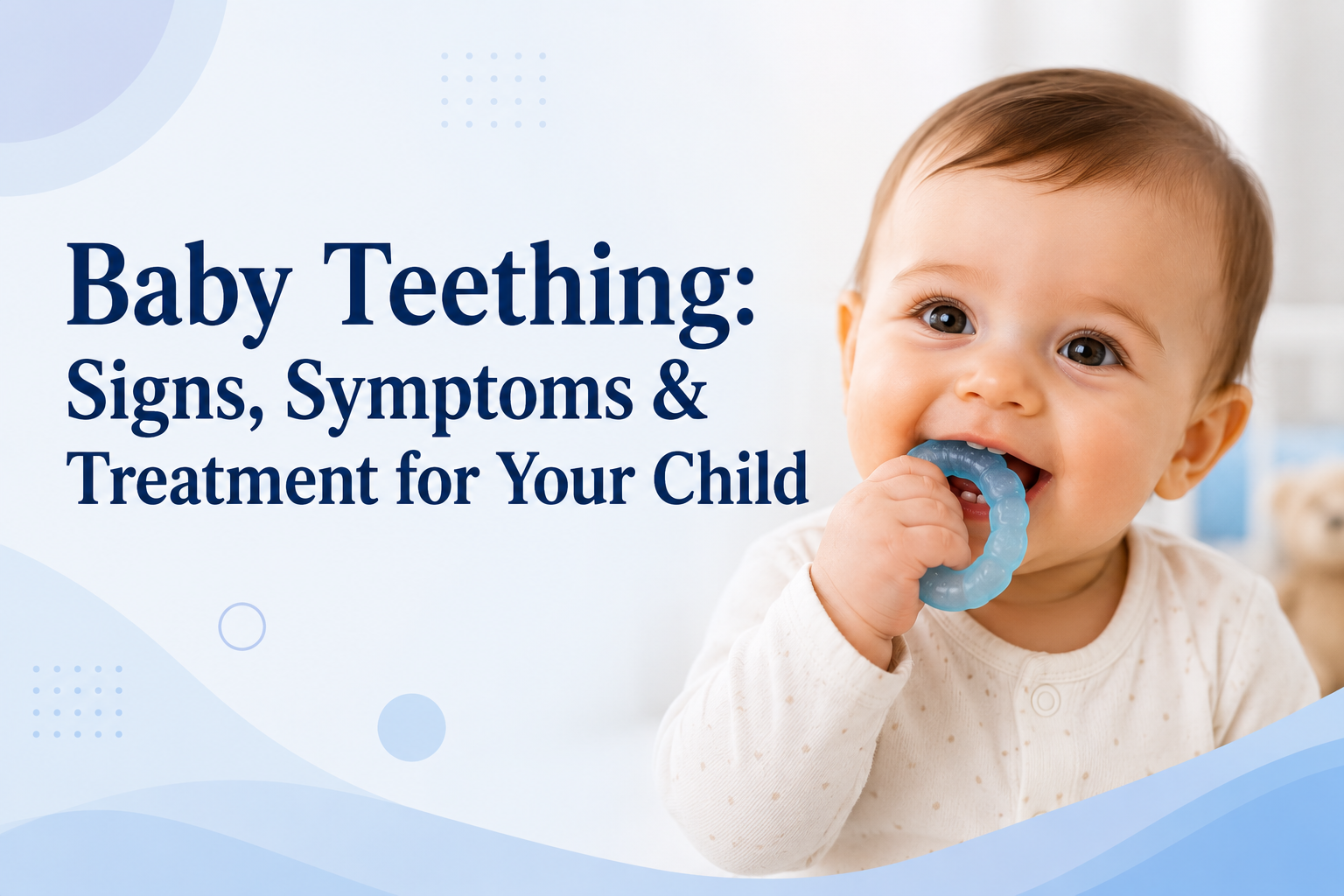
Watching your baby’s first tooth appear is an exciting milestone, but it can also be a challenging time for parents. Teething often brings temporary discomfort, making babies fussier than usual and leaving parents wondering how to help.
Most babies begin teething between 4 and 7 months of age, although every child develops at their own pace. Understanding the common signs of teething and knowing safe ways to relieve discomfort can make this stage much easier for both you and your baby.
In this guide, we’ll discuss the common signs of baby teething, effective treatment options, and when it’s time to visit a pediatric dentist.
What Is Baby Teething?
Teething is the natural process of your baby’s primary (baby) teeth breaking through the gums. These teeth are essential for chewing, speech development, and guiding permanent teeth into their proper positions later in life.
Most children have 20 primary teeth by the age of three. Although the timing varies, the lower front teeth are usually the first to appear.
While teething can cause mild discomfort, it is a normal part of your child’s growth and usually doesn’t require medical treatment.
Common Signs of Baby Teething
Every baby experiences teething differently. Some children show very few symptoms, while others become more uncomfortable as their teeth begin to erupt.
Common signs include:
-
Increased drooling
-
Swollen or tender gums
-
Constant chewing on fingers or toys
-
Mild irritability or fussiness
-
Changes in sleeping patterns
-
Reduced appetite for a short period
A slight increase in body temperature may occur, but high fever, severe diarrhea, or persistent vomiting are not normal symptoms of teething. If your baby experiences these symptoms, consult your pediatrician.
Safe Treatment for Baby Teething
Although teething cannot be prevented, there are several safe ways to ease your baby’s discomfort.
Massage the Gums
Gently rubbing your baby’s gums with a clean finger can help reduce pressure and soothe sore gums.
Use a chilled teething ring.
A chilled (not frozen) teething ring provides gentle cooling that can help relieve gum irritation.
Offer a cool washcloth.
A clean, damp washcloth that has been chilled in the refrigerator can provide additional comfort when your baby chews on it.
Continue Regular Feeding
Some babies prefer smaller, more frequent feedings during teething. Continue breastfeeding or bottle-feeding as usual while keeping your baby comfortable.
Pain Relief Medication
If your baby’s discomfort becomes severe, consult your pediatrician before giving any medication. Only use age-appropriate pain relievers as directed by a healthcare professional.
Caring for Your Baby’s Teeth During Teething
Healthy oral care should begin even before the first tooth appears.
-
Wipe your baby’s gums with a clean, damp cloth after feedings.
-
Once the first tooth erupts, brush twice daily using a soft infant toothbrush and a smear of fluoride toothpaste.
-
Avoid putting your baby to bed with a bottle containing milk or juice, as this increases the risk of early childhood tooth decay.
-
Schedule your baby’s first dental visit by their first birthday or within six months after the first tooth appears.
Developing good oral hygiene habits early helps protect your child’s smile for years to come.
When Should You See a Pediatric Dentist?
Teething is usually a normal developmental stage, but professional evaluation is recommended if:
-
No teeth have appeared by 18 months of age.
-
Your baby experiences severe gum swelling or bleeding.
-
A newly erupted tooth appears damaged or discolored.
-
Feeding becomes consistently difficult because of oral discomfort.
-
You have concerns about your baby’s oral development.
Early dental visits allow your pediatric dentist to monitor your child’s growth and provide personalized guidance for healthy oral development.
Conclusion
Teething is a natural milestone that every child experiences differently. While drooling, swollen gums, and mild fussiness are common, simple home care and good oral hygiene can help keep your baby comfortable during this stage.
If you ever have concerns about your baby’s teething symptoms or oral health, the team at Smile Explorers is here to help. Our experienced pediatric dentists provide gentle, compassionate care to ensure your child’s smile gets the healthiest possible start.