


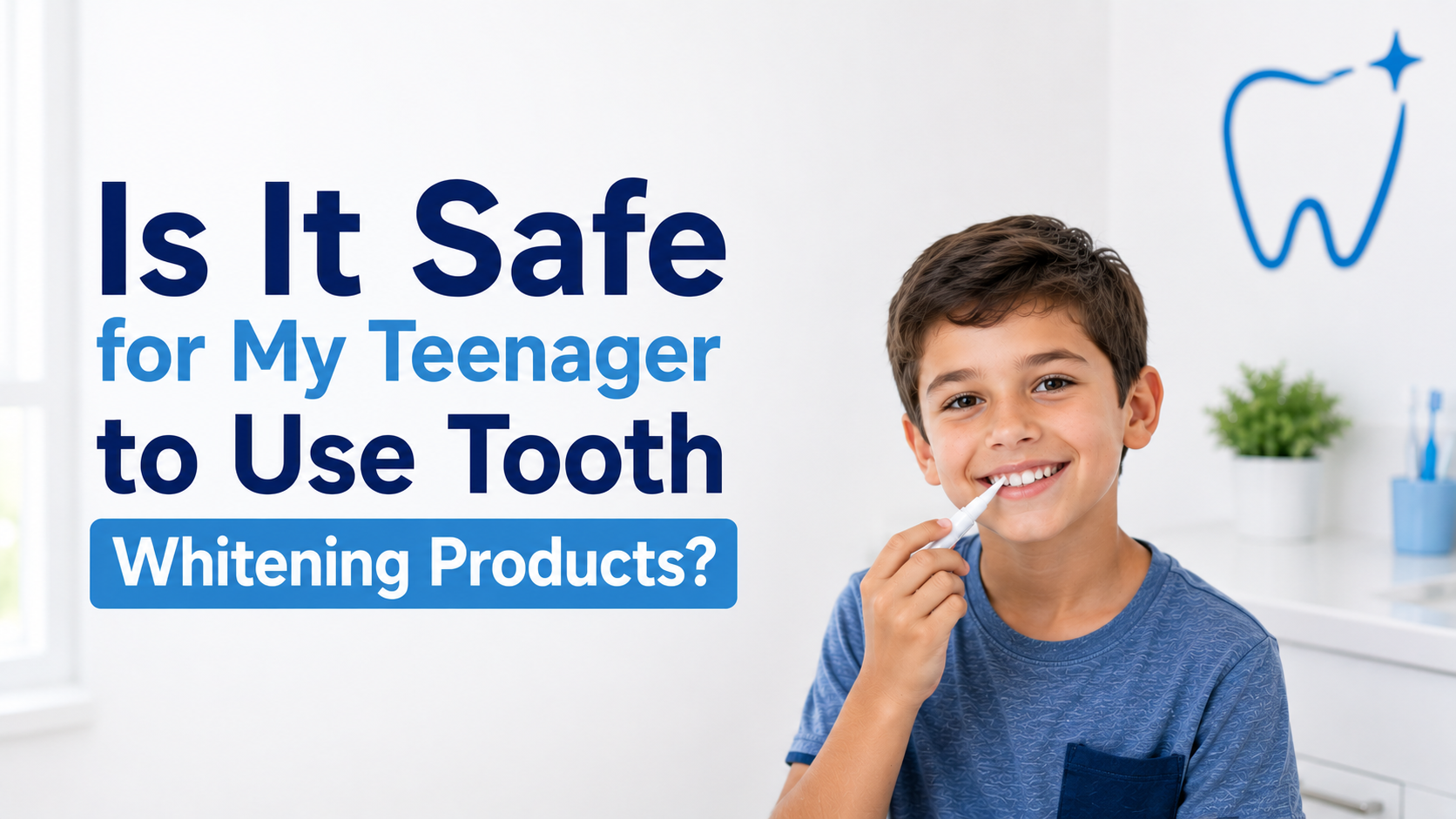
If your teenager has started asking for whiter teeth, you are not alone. Teens often become more aware of their smiles as they grow, especially when they see whitening products promoted on social media, in stores, or online. But as a parent, it is natural to wonder:- Are tooth whitening products actually safe for teenagers? The short answer is that tooth whitening may be appropriate for some teenagers, but it should not be treated like an ordinary beauty product. A teen’s teeth and gums are still developing, and the safest approach depends on their age, dental development, oral health, and the reason their teeth look discolored. Before your teenager starts using whitening strips, gels, trays, or other whitening products, it is best to speak with a pediatric dentist.
Why Do Teenagers Want Whiter Teeth?
Teenagers may notice yellow or stained teeth for many different reasons. Some discoloration comes from everyday habits, while other changes in tooth color may have a dental cause. Common reasons include:-
- Drinking coffee, tea, cola, or other dark-colored beverages
- Eating foods that can stain the teeth
- Poor brushing or flossing habits
- Plaque buildup
- Certain medications or supplements
- Fluorosis
- Previous dental trauma
- Changes in the enamel
- Naturally darker tooth color
Not every type of discoloration can be treated with whitening. Surface stains may respond to professional cleaning or appropriate oral hygiene, while deeper discoloration may require a different dental treatment. That is why identifying the cause is an important first step.
Is Tooth Whitening Safe for Teenagers?
Tooth whitening can be safe for selected adolescent patients when it is properly planned and supervised. The American Academy of Pediatric Dentistry recommends that bleaching for children and adolescents be incorporated into an individualized treatment plan and that at-home whitening products used by young patients be supervised by an adult. However, this does not mean every teenager should use an over-the-counter whitening product. A dentist should first check the condition of the teeth and gums. Cavities, enamel problems, gum inflammation, significant sensitivity, or existing dental restorations may affect whether whitening is appropriate. The goal should always be a healthy smile first and a whiter smile second.
What Age Is Appropriate for Teeth Whitening?
There is no single age that is right for every teenager. The timing depends on dental development and whether the permanent teeth have erupted. Smile Explorers notes that many dentists consider whitening around age 14 or later, when the permanent teeth are more established. The AAPD also emphasizes considering the adolescent’s developmental stage, oral hygiene, and cavity risk when deciding whether bleaching is appropriate. Younger children and teens who still have a mixture of primary and permanent teeth may not be good candidates for full-arch cosmetic whitening. The AAPD specifically discourages full-arch cosmetic bleaching during the mixed dentition stage.
Instead of focusing only on age, parents should ask:-
Are all or most of the permanent teeth present? Are the teeth and gums healthy? And is whitening actually necessary?
A pediatric dentist can help answer these questions.
What Are the Risks of Whitening Products?
The most common side effects associated with tooth bleaching are temporary tooth sensitivity and gum irritation. The American Dental Association identifies these as common adverse effects of vital tooth whitening.
Your teenager may notice:-
Tooth Sensitivity :- Teeth can temporarily become more sensitive to cold drinks, hot foods, or sweet foods during or after whitening. Higher concentrations of bleaching ingredients may increase the likelihood of sensitivity. If your teenager already has sensitive teeth, whitening should not be started without professional advice.
Gum Irritation :- Whitening gel that comes into contact with the gums can cause irritation. Poorly fitting trays or incorrect application can make this problem more likely.
Uneven Whitening :- Whitening does not change the color of fillings, crowns, or other tooth-colored restorations. This can sometimes result in a noticeable difference between natural teeth and dental restorations.
Whitening the Wrong Problem :- If a tooth is dark because of trauma, infection, enamel changes, or another dental condition, simply using a whitening product may not address the underlying problem. A dental examination can help determine what is actually causing the discoloration.
Are Whitening Strips Safe for Teens?
Whitening strips are widely available and generally contain peroxide-based ingredients. They can be effective for reducing certain stains, but they are not automatically appropriate for every teenager. The biggest concern is unsupervised or incorrect use. A teenager may leave a product on for too long, use it too frequently, apply too much gel, or continue using it even after developing sensitivity. Following the product instructions is important, but a dentist can provide more personalized guidance based on the teen’s teeth. If your teen wants to use whitening strips, talk with their dentist first rather than choosing a product based only on social media recommendations.
What About Whitening Toothpaste?
Whitening toothpaste is different from professional bleaching. Many whitening toothpastes primarily help remove surface stains through gentle polishing or abrasive ingredients rather than dramatically changing the natural color of the teeth. For a teenager with mild surface staining, improving brushing habits or having a professional dental cleaning may make a noticeable difference without bleaching. Parents should also remind teens not to scrub their teeth aggressively in an attempt to make them whiter. Good oral hygiene is about cleaning the teeth effectively, not brushing harder.
Is Professional Whitening Safer?
When whitening is appropriate, professional treatment provides an important advantage: the dentist can evaluate the teen before treatment and select an appropriate method. Professional options may include:-
- Dentist-supervised whitening at home
- Custom-made whitening trays
- In-office whitening in selected cases
Smile Explorers describes professional at-home whitening as an option in which custom trays and professional-strength gel are provided according to an individualized plan. Professional treatment can also help reduce the chance of unnecessary exposure or improper application. The ADA recognizes in-office bleaching, dentist-supplied at-home products, and over-the-counter whitening products as different approaches to whitening.
When Should Your Teen Avoid Whitening?
Whitening may need to be postponed if your teenager has untreated dental problems. Talk to a dentist before whitening if your teen has:-
- Cavities
- Bleeding or inflamed gums
- Significant tooth sensitivity
- Cracked or damaged teeth
- Enamel defects
- Extensive dental restorations
- A tooth that suddenly became dark
- Ongoing dental pain
It is especially important not to use whitening products to cover up a sudden change in tooth color. A darkened tooth can sometimes indicate an underlying dental issue that needs evaluation.
How Can Your Teen Keep Teeth Looking Bright Naturally?
Many teenagers can improve the appearance of their smiles without bleaching. Encourage your teen to:-
- Brush twice a day with fluoride toothpaste.
- Clean between the teeth every day.
- Attend regular dental checkups.
- Drink water regularly.
- Limit frequent consumption of staining drinks such as cola, tea, and coffee.
- Avoid tobacco and nicotine products.
- Follow good oral hygiene around braces or other orthodontic appliances.
- Avoid aggressive brushing.
Professional dental cleanings can also help remove plaque, calculus, and surface stains that brushing alone may not remove.
What Should Parents Do Before Buying a Whitening Product?
Before purchasing a whitening kit for your teenager, schedule a dental examination. A pediatric dentist can determine whether the discoloration is simply a surface stain or whether it has another cause. They can also assess the condition of the enamel, gums, and permanent teeth and recommend the least invasive appropriate option. If whitening is recommended, parents should supervise at-home treatment and make sure the teenager follows the dentist’s instructions. Remember, more whitening does not necessarily mean a healthier or better-looking smile.
The Bottom Line: Should Your Teenager Whiten Their Teeth?
Teenage tooth whitening can be appropriate in certain situations, but it should be approached carefully. The safest decision is not simply based on the whitening product or the teenager’s age. It depends on the condition and development of the teeth, the cause of discoloration, and the treatment method being considered.
The AAPD supports safe and effective whitening for appropriately selected children and adolescents but recommends individualized treatment planning and adult supervision for at-home products. If your teenager wants a brighter smile, start with a dental checkup rather than an online whitening kit. A pediatric dentist can help you understand why the teeth look discolored, whether whitening is appropriate, and which option is safest for your teen’s developing smile. At Smile Explorers Pediatric Dentistry, the focus is on helping children and teens maintain healthy, confident smiles while choosing dental treatments carefully and appropriately for their stage of development.